
Esports betting in New Zealand: how the price gets built, and what it leaves the punter with
 Available in US
Data current as of 26 October 2026, checked against the Racing Industry Act 2020 (as amended in 2025), the Department of Internal Affairs public statements, the TAB NZ website and each bookmaker’s own published terms.

The cheapest way to think about esports betting in New Zealand is also the most useful one. The price a bookmaker quotes is never a fair number. It has a margin tucked into it — a small, baked-in slice the book keeps of every dollar staked on a market. Once that is visible, the rest of the page is a tour of the things that sit on top of it: the rules a market settles by, the live markets that move while a match is on, the bonuses whose real cost is in the rollover they require, and the offshore brands that have no New Zealand licence and no New Zealand complaints route when something goes wrong. The angle here is cost. Every section below answers one form of “what does this cost the punter?” — in turnover, in margin, in a rule the punter pays for but does not see.
New Zealand’s framework is unusual. Section 74AAA of the Racing Industry Act 2020, in force since 28 June 2025, gives TAB NZ the sole right to take racing and sports bets from people in New Zealand, online or otherwise. The Department of Internal Affairs read the change to every overseas operator serving New Zealand and asked them to withdraw with immediate effect. There is no application to make, no register of bookmaker licences, and no second legal online bookmaker inside the country. TAB NZ runs two online brands — TAB and Betcha — and they are sister sites of the same operator, never rivals. Any other site a New Zealand punter can reach is an offer the operator has no authorisation to make in this country.
Table of Contents
- Live betting and the cash-out line on esports
- Predictions, tips and the bankroll question
- Bet types and how the odds are built
- Sports, tournaments and the calendar that drives the price
- The 10 brands a New Zealand punter actually meets
- What esports actually is
- The law, and what it means for the punter
- Keeping the punter safe
- Crypto, anonymity and the cost of pseudo-privacy
- Bonuses, free bets and what the rollover actually asks
- Payments and the cost of speed
- The app, the handset and what the punter actually uses
- Frequently asked questions
Live betting and the cash-out line on esports
In-play betting is the part of esports that most resembles a sport. A round of Counter-Strike, a team fight in Dota 2, a base race in StarCraft — these are sequences of decisions, and the price of a market changes as the sequence plays out. The bigger the move, the more interesting the in-play price becomes, and the more the bookmaker’s margin matters, because the spread on a live market tends to be wider than the pre-match one. That is a real cost, paid on every bet, and it is the first number to look for.
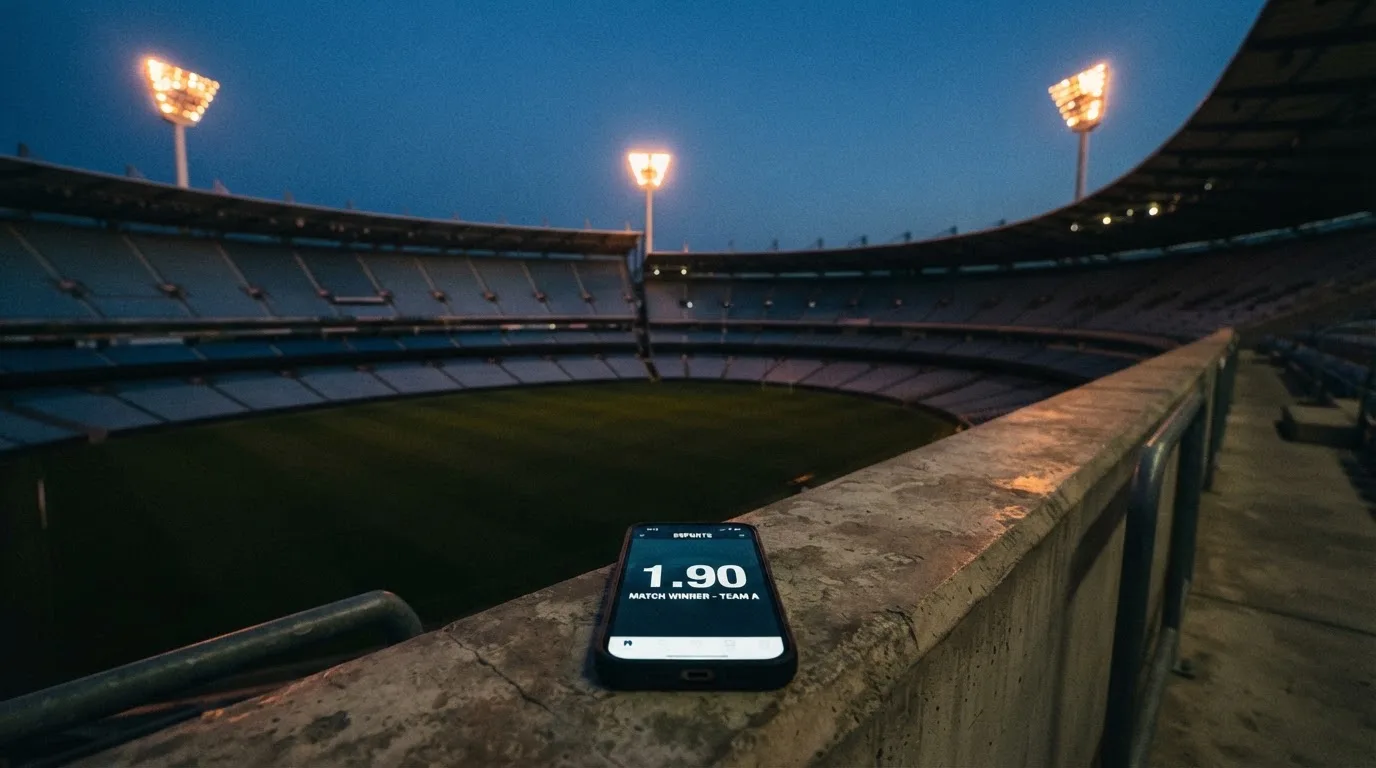
What live betting does is shorten the window. A pre-match bet has hours to be priced, hedged and reviewed. A live bet has seconds. The bookmaker charges for that, and the price the punter sees already includes the charge. On a League of Legends match that drifts from 1.80 to 2.20 as one side loses the first two maps, the new 2.20 is not a clean reflection of the changed odds — it is the same changed odds with the live spread still in it. The punter pays the spread either way, but the live spread compounds the cost of moving quickly.
Cash-out is the bookmaker’s exit door. It lets the punter close a bet before the match ends, at a price the book sets in real time. Two things to know about it. First, the cash-out price is the same market with the same margin, recomputed by the book — it is not a refund at the original odds. Second, the cash-out is only as good as the live price the book is willing to post, and on a quiet market or a fast-moving match, the book may widen the spread, suspend the market, or pull cash-out for periods. A punter using cash-out as a stop-loss is paying for the same protection twice: once in the original margin on the bet, and once in the cash-out spread the book keeps.
For a New Zealand punter, the only online bookmaker offering live esports markets inside the law is TAB NZ, through its TAB and Betcha brands. Offshore brands with live esports ladders — Thunderpick, Roobet, Paripesa — post prices and offer cash-out, and they may quote tighter live spreads than the wider market. None of that changes the licence situation. A live bet placed with an offshore brand is, on the operator’s side, the same breach of section 74AAA as a pre-match one. The Department of Internal Affairs warns that overseas operators may not return unspent credits and may not pay out large wins — risks that grow more material when the bet is unsettled and the cash-out is the exit.
A short checklist for live esports:
- The live price on a quiet map is wider than the pre-match price. Place the bet before the map if the value is there.
- Cash-out is a market, not a refund. The price the book offers is its own, recomputed.
- Suspended markets are normal on technical pauses and on disputed rounds. A punter who cannot tolerate a frozen position does not have the temperament for live esports.
- A live bet with an offshore brand has the same legal risk as any other bet with that brand, plus the added risk of a payout dispute on an unsettled wager.
Predictions, tips and the bankroll question
“Tips” are one of two things. They are either a market call — the tipster believes a price is wrong and is publishing the bet — or they are content. A punter who can tell the difference does not need tips; a punter who cannot is paying for a confidence that the tipster’s track record does not actually support. No tracked tipster service in esports has the kind of audited, fee-disclosed, multi-year record a punter requires before paying for picks. Free tipster accounts on social platforms are a different case: their price is the ad revenue the account generates, and the punter’s price is the bets that the tipster’s confident tone leads the punter to place. That price is real, and it compounds, because the tipster is paid to publish picks, not to manage the punter’s staking.

A bankroll plan is the other side of the same problem. The point of a bankroll is to make the bets that look right and skip the ones that do not. Three rules the maths of staking rewards:
- Stake a fixed percentage of the bankroll, usually between 1 and 3 per cent. A 5 per cent stake on a confident pick is no longer a confident pick, it is a tilt.
- Log every bet, including the price, the market, the closing line and the result. A punter who does not log is a punter who will repeat the losing patterns.
- Stop after a losing streak defined in advance. A punt that ends in anger ends worse than one that ends by plan.
A “strategy” in esports is usually a market specialisation, not a system that wins. A punter who watches enough Dota 2 to spot a draft that is hard to execute, or enough Counter-Strike to feel when a team is tilting, has an edge on the price the book posts, because the book prices on the average. The edge is small, and it costs the punter time, not a subscription.
What predictions and strategies cost the punter, in summary: time, the opportunity cost of bets not placed, and the bets that a confident pick in a public chat room always seems to produce. None of that is paid in dollars. All of it is paid in bankroll.
Bet types and how the odds are built
The pre-match price on an esports market is a decimal. A price of 1.90 on the favourites means a $10 stake returns $19 — the original $10 stake and $9 of profit. A price of 3.40 on the underdog means a $10 stake returns $34. The numbers look simple. The relationship between them is the entire point.
A two-way market with decimal odds of 1.90 and 1.90 has a built-in cost. The implied probabilities add to 105.3 per cent (1 ÷ 1.90 plus 1 ÷ 1.90). That is 5.3 per cent more than a fair market, and the extra is the bookmaker’s margin. On a perfectly even contest the price is 2.00 on each side, the implied probabilities add to 100 per cent, and the book makes no money from the market. Every bookmaker’s esports market is built to come in above 100 per cent, and the gap is the slice the book keeps of every dollar staked.
The illustrative example is on the conservative side. Real esports markets often show margins in the 6 to 8 per cent band on the major titles (League of Legends World Championship, The International, ESL Pro League, Intel Extreme Masters) and wider on smaller events. A market on a regional qualifier can run 10 per cent or higher. The punter pays that margin every bet, and the price difference between a 5 per cent and an 8 per cent margin is the difference between $95 and $92 returned per $100 staked across the whole market. The bigger events have tighter prices because the betting public is larger and the bookmakers compete more aggressively for the handle.
Three esports-specific bet types to know:
- Match winner (head-to-head). The simplest. The price reflects the book’s view of which team wins the series, with the standard margin.
- Map handicap. A line like Team A −1.5 maps means the bet only pays if Team A wins the series 2-0 or 3-0, depending on the format. The handicap adjusts the price both ways; the margin stays built in.
- Map totals. Over/under on the number of maps played. A best-of-three that runs three maps is the over; a 2-0 sweep is the under. The price on a totals market is its own margin, often a touch tighter than the head-to-head.
Combination bets (multis) multiply the legs into one price. A two-leg multi at 1.90 and 1.90 has a combined price of 3.61, before the book rounds and the margin re-inserts. The catch is that the margin compounds across the legs, and a multi of four legs at 1.90 each has a margin close to 22 per cent, not the 5.3 per cent of a single bet. Multis are sold to the punter as a way to “boost” a stake, and they do — the price is much bigger — but the punter is paying four margins for one payout. A punter who can find two singles with a similar expected return is paying less for the same outcome.
Sports, tournaments and the calendar that drives the price
Esports is not one market. It is a dozen, and the punter who treats them as one pays for the confusion. League of Legends has its own meta, its own teams, its own ladder of regional strength. Dota 2 is a different game, with The International as its anchor event and a meta that shifts patch by patch. Counter-Strike is a tactical shooter with a tight professional scene and a calendar that runs all year. Valorant is younger, with a Riot-organised championship at the top and a regional league system beneath. Overwatch has its own championship structure. Call of Duty runs on a console calendar with a smaller betting handle. Fortnite and Rocket League sit between esports and the streaming platform, with a competitive scene but a thinner bookmaker market. StarCraft is the older reference point, with a long Korean history and a smaller current bookmaker presence.
The tournaments research points to as the anchors of the calendar:
- The League of Legends World Championship. Riot’s flagship. Best-of-five final, regional qualification, the largest single-game viewership in esports. The book’s market depth is deepest here, the margin is tightest, the markets are most varied (map handicap, first blood, total kills, duration).
- The International (Dota 2). Valve’s annual championship. The crowdfunded prize pool is the headline — The International 2021 was above US$40 million, the largest in esports history at that time — and the betting market is correspondingly deep, with map markets and a wide prop menu.
- EVO (Evolution Championship Series). The fighting-game reference. Tekken, Street Fighter, Super Smash Bros. The market is narrower, the margin wider, the liquidity lower.
- Intel Extreme Masters (IEM). Counter-Strike’s main circuit. Best-of-three group stage into best-of-five playoffs. The book’s Counter-Strike markets cluster around IEM events.
- The Esports World Cup. A 2024-launched multi-title championship that took the 2025 edition with Team Falcons as the Club Championship winner and a US$71.5 million prize pool. The 2026 edition is scheduled for 6 July to 23 August 2026 in Paris, with a US$75 million prize pool and 24 games. A new event with a large handle, and the price will tighten across the season as the books learn the field.
The punter’s cost of treating esports as one market is that the depth of the book does not match. A bet on the LoL Worlds final sits inside a market with hundreds of millions in cumulative handle; a bet on a regional Call of Duty qualifier sits inside a market with a small fraction of that. The bookmaker’s margin on the second is wider because the book needs a wider spread to manage its own risk on a thin book. The punter pays the difference, every bet.
The 10 brands a New Zealand punter actually meets
What follows is the comparison the page is built around: the two brands New Zealand law allows, and the eight brands a New Zealand punter is most likely to encounter elsewhere. They are not ranked, and the offshore group is not recommended. The first two are the only lawful options. The rest operate on their own terms, in jurisdictions that do not include New Zealand.
| Brand | New Zealand status | What the operator’s own terms state on esports and access |
|---|---|---|
| TAB | TAB NZ brand | The TAB NZ app lists Trackside live race streaming, racing form, Blackbook and Jockey Challenge tools, and a simplified wallet for deposits and withdrawals; esports markets are offered through TAB NZ’s published sports-betting program. |
| Betcha | TAB NZ brand | One of two TAB NZ online brands (with TAB); same racing and sports programme, same rules, same wallet — a sister site, not a rival bookmaker. |
| LegendPlay | Not licensed in New Zealand | Lists sports promotions named First Deposit Bonus, Weekly Reload Bonus, Sport Jackpot, Virtual Sports Excitement and Acca Boost; esports appears within the sportsbook. |
| BetNinja | Not licensed in New Zealand | Licensed to conduct online gaming operations by the Union of the Comoros; the site’s offer is casino-led, with an esports section through the sportsbook. |
| BigClash | Not licensed in New Zealand | Terms do not list New Zealand among the excluded jurisdictions, and NZD is included in the currency table of withdrawal limits, from NZ$1,000 per day / NZ$13,000 per month at VIP level 1 to NZ$3,000 per day / NZ$35,000 per month at level 5. |
| BillyBets | Not licensed in New Zealand | Includes cashback and reload bonuses on sports, and a coin shop where coins collected by depositing, betting, tournaments and challenges can be exchanged for free bets and free spins; the VIP programme has five levels. |
| BetAlright | Not licensed in New Zealand | Terms do not list New Zealand among the excluded jurisdictions in section 2.3, and NZD appears in the withdrawal limits table, from NZ$1,000 per day / NZ$13,000 per month at level 1 to NZ$3,000 per day / NZ$35,000 per month at level 5. |
| Golden Panda | Not licensed in New Zealand | Offers a Sports section with a sportsbook, esports and virtual sports, plus casino, live casino, crash games, rewards, cashback, a VIP Club, Golden Goals and Prediction Markets. |
| Millioner | Not licensed in New Zealand | States that e-wallet deposits and payouts are fast while credit card transactions take longer because a bank processes them; esports is part of the sportsbook. |
| Rooster.bet | Not licensed in New Zealand | Operated by Novatrix SRL, a company incorporated in Costa Rica with registration number 3-102-893958, under e-gaming licence No. 0000002 issued by the Tobique Gaming Commission; sportsbook includes esports. |
Three things the table makes clear. First, the lawful set is small — two brands, one operator. Second, the offshore brands name licences from jurisdictions the Department of Internal Affairs does not recognise. Third, the offshore brands all accept NZD in some form, which is a commercial decision, not a legal one — accepting the currency is not the same as being licensed to take the bet. A punter who sees a familiar dollar sign and assumes the brand is licensed makes a mistake the table is built to prevent.
The detail on each brand below is the page’s own judgement of what the brand is, on the cost axis this site is built around. The two TAB NZ brands are the lawful option. The offshore brands vary in what they offer and what they cost; none of them is recommended, and the verdict on each names the cost the brand imposes on the punter.
TAB — the only legal fixed-odds bookmaker in New Zealand
TAB is one of two online brands run by TAB NZ, the monopoly operator set up under the Racing Industry Act 2020. TAB NZ’s partner Entain runs the day-to-day business under a 25-year agreement signed in 2023 — the deal gives Entain a 50/50 share of gross profits, with at least $150 million a year going to TAB NZ for the first five years, and a one-off $100 million payment from Entain to the racing sector. The partnership is the operational engine behind the lawful option; the licence is New Zealand’s, and the regulator is the Department of Internal Affairs.
The TAB NZ app — the punter’s window onto the brand — is built around racing. It includes Trackside live race streaming with in-app betting, racing form, Blackbook and Jockey Challenge tools, and a simplified wallet for deposits and withdrawals. Esports sits inside the sports-betting programme, and the live market ladders on the major titles are present. The brand offers fixed-odds and tote (pool) bets, with the same betting rules governing both. The punter’s wallet is one, and the betting rules are one — the brand is one operator under two skins.
Verdict. TAB is the legal baseline. A New Zealand punter who places an esports bet with TAB pays the bookmaker’s margin, pays the standard tote-take on pool bets, and pays nothing else — there is no offshore tax wedge, no offshore conversion cost, and no risk that the operator will not pay out. The complaints route is the New Zealand one, and the harm-minimisation tools (deposit limits, time-outs, self-exclusion) sit inside the app. A punter who treats TAB as the floor and never the ceiling is the punter who pays the least for the bets they want to place.
Betcha — the other TAB NZ brand
Betcha is the second online brand of TAB NZ, launched alongside the legal change. Same operator, same wallet, same rules, same racing programme, same esports ladders. The two brands are not rivals; they are two apps into the same pool. The bet types available — Win, Place, Each Way, Quinella, Exacta, Trifecta, First Four, Double, Treble, Daily Double, Running Double, Quaddie, Big6, plus Multis and Same Game Multis — are TAB NZ’s published list, not a Betcha-specific menu.
What Betcha offers the punter is a separate product surface. The sportsbook is its own, and the promotions are its own. The law treats both brands as one operator; the punter’s experience of the two may differ, particularly in app design, in-play presentation and the headline offers of a given week.
Verdict. A punter who already has a TAB account is paying nothing to also have a Betcha account, and a punter who finds a price on Betcha that the TAB app does not show is not paying a margin premium for switching. The cost of the two-brand setup is mostly the punter’s time in checking both, and a small risk of mixing the wallets. For a punter who likes a clean app and a clean set of rules, Betcha is the cheaper of the two brands to use on a daily basis.
LegendPlay — a sportsbook with bonus-tier marketing
LegendPlay is an offshore sportsbook-and-casino brand whose home terms list sports promotions named First Deposit Bonus, Weekly Reload Bonus, Sport Jackpot, Virtual Sports Excitement and Acca Boost. The licence it names is from the Anjouan Gaming Authority, which is not recognised here. The esports ladder is part of the sportsbook, and the bonus structure sits on top of every other offer.
The cost of the brand to the punter starts with the licence gap. There is no New Zealand complaints route, no New Zealand harm-minimisation framework, and no recourse inside the country if a payout is disputed. The bonus structure adds a second cost: each promotion comes with its own rollover, its own minimum price, and its own eligible-markets list, and the punter who claims without reading pays a turnover bill the marketing did not mention. The bonus maths is the page’s section to come.
Verdict. A punter who reads the bonus terms carefully and treats every promotion as a cost, not a gift, can use LegendPlay without paying more than the bookmaker’s margin. A punter who does not, pays the rollover on top. The licence gap is the floor on what the brand costs the punter, and no promotion can offset it.
BetNinja — a casino-led brand with an esports section
BetNinja states it is licensed to conduct online gaming operations by the Union of the Comoros. The brand is casino-led; the esports section runs through the sportsbook and is a slimmer offering than the dedicated esports books. The Comoros licence is not recognised in this country, and the operator’s terms are the place to check the jurisdiction list before any account is opened.
The cost of the brand to the punter is the licence gap plus the depth of the esports market. A punter who wants a wide ladder on The International or the LoL Worlds final will not find it on BetNinja. A punter who wants a single bet on a headline match will. The thinner the market, the wider the spread the book has to charge to manage its risk, and the punter pays that on every bet.
Verdict. BetNinja is a brand for the punter who wants esports as an extra, not as the main event. The cost is a wider margin on every esports bet and the licence gap on the operator side. A New Zealand punter with a TAB NZ account has no reason to add BetNinja unless the bet is genuinely unavailable on TAB.
BigClash — a tiered VIP bookmaker with NZD support
BigClash’s terms do not list New Zealand among the excluded jurisdictions, and the NZD is included in the currency table of its withdrawal limits, from NZ$1,000 per day / NZ$13,000 per month at VIP level 1 to NZ$3,000 per day / NZ$35,000 per month at level 5. The brand names a Curaçao licence (8048/JAZ), which is not recognised here, and the tier structure means the punter’s effective limits depend on their VIP level.
The cost of the brand to the punter is layered. The licence gap is the first cost. The tier structure is the second: a new punter faces the level 1 daily and monthly limits, and a punter who plans a single large withdrawal faces the monthly cap. The marketing that promotes the higher tier is the third cost: the punter pays the volume of bets the tier climb requires, with the bookmaker’s margin on every one of them.
Verdict. BigClash is a brand for the punter who plans to bet at volume, can climb the VIP ladder, and accepts the licence gap as the cost of the offer. A New Zealand punter who places a single esports bet a month finds the limits are the wrong shape, and the licence gap is the same as it is on a smaller bookmaker.
BillyBets — coin-shop and reload mechanics
BillyBets includes cashback and reload bonuses on sports, and a coin shop where coins collected by depositing, betting, tournaments and challenges can be exchanged for free bets and free spins. The VIP programme has five levels. The brand names no licence that applies in New Zealand, and the coin mechanic is its distinctive feature: a punter earns coins through play, then converts them at a posted rate.
The cost of the brand is the licence gap plus the implicit tax on every bet. Coins are earned per unit of stake, not per unit of profit, so the punter pays the bookmaker’s margin on every bet, then pays a small slice of the stake as a “coin” that the operator is willing to redeem in bonus form. The redemption value is always less than the cash value, by design, and the punter who treats the coin shop as a cashback is overpaying.
Verdict. A punter who likes a reward loop and reads the coin conversion rate is paying the same margin as on a plain bookmaker, with a small additional cost in the form of the coin-to-bonus conversion. A punter who does not read the rate is paying more. The licence gap is unchanged.
BetAlright — NZD support and the level-1 floor
BetAlright’s terms do not list New Zealand among the excluded jurisdictions in section 2.3, and the NZD appears in the withdrawal limits table, from 1,000 per day / 13,000 per month at level 1 to 3,000 per day / 35,000 per month at level 5. The brand names no licence that applies in New Zealand. The shape of the offer is a tiered sportsbook with a standard promotions programme.
The licence gap, the level-1 daily and monthly withdrawal limits for the new customer, and the standard bookmaker’s margin define the entry cost. The numbers in the table are similar to BigClash’s, and the structural cost is the same: a punter planning a large withdrawal either climbs the VIP ladder or waits.
Verdict. Like BigClash, BetAlright is a brand for the punter who plans to bet at volume. The level-1 floor is the right ceiling for a small-stakes New Zealand punter, and the licence gap is the same on every offshore bookmaker. A punter who reaches for BetAlright because the TAB NZ app is missing a price is paying a real premium for the convenience, and the only question is whether the price on offer is wide enough to clear it.
Golden Panda — a sportsbook with a casino shell
Golden Panda offers a Sports section with a sportsbook, esports and virtual sports, plus casino, live casino, crash games, rewards, cashback, a VIP Club, Golden Goals and Prediction Markets. The brand names no licence that applies in New Zealand. The product is a combined sportsbook-and-casino, with the esports market inside the sportsbook and a separate casino offer on the same wallet.
The licence gap and a sportsbook that is a smaller part of the brand than the casino define the cost. A punter looking for deep esports ladders or live in-play ladders finds a thinner market than on a dedicated bookmaker. The casino offer, on the other hand, is wide, and the punter who wanders from a sports bet into a casino game moves from a margin the book discloses to a house edge the game conceals.
Verdict. Golden Panda is a brand for the punter who wants esports as a small part of a wider product, not the centre. The cost is the licence gap and the temptation of the casino offer behind the same wallet. A New Zealand punter with a TAB NZ account is paying the casino tax on top of the esports bet, and the two have to be tracked separately.
Millioner — payment-speed marketing
Millioner states that e-wallet deposits and payouts are fast while credit card transactions take longer because a bank processes them. The marketing leans on payment speed, and the sportsbook includes esports.
The licence gap and a sportsbook that competes on payment rails rather than on price define the cost. A faster payout is not a better price; the bookmaker’s margin is the same whether the money arrives in an hour or in a day. The punter who chooses a bookmaker for the deposit speed pays a price the operator has built into the offer.
Verdict. A punter who needs a fast payout for a reason — a closing position, a self-imposed rule — knows why they are on Millioner. A punter who chooses the brand for the deposit speed alone is paying a premium for nothing the margin does not already price in. The licence gap is unchanged.
Rooster.bet — Tobique-licensed sportsbook
Rooster.bet is operated by Novatrix SRL, a company incorporated in Costa Rica with registration number 3-102-893958, under e-gaming licence No. 0000002 issued by the Tobique Gaming Commission. The brand names a Tobique licence, which is not recognised here. The sportsbook includes esports, and the brand is positioned as a sportsbook with a casino shelf.
The cost to the punter is the licence gap and a sportsbook that is a moderate-sized part of a brand whose centre of gravity is elsewhere. A punter looking for a wide esports market will find a workable one; a punter looking for the deepest ladders on LoL Worlds or The International will not. The Tobique licence is the regulator the brand chose; the New Zealand regulator is the one the punter pays for the absence of.
Verdict. Rooster.bet is a brand for the punter who wants an esports bet that is unavailable elsewhere, with a bookmaker whose product is a sportsbook. The cost is the licence gap, a market depth between TAB NZ and a dedicated esports book, and the standard bookmaker’s margin. A New Zealand punter who finds a price on Rooster.bet that the TAB app does not show weighs the price difference against the licence gap before placing.
What esports actually is
Esports is a form of competition using video games, usually organised multiplayer competitions between professional players, individually or in teams. The titles that draw the betting handle are the ones the public recognises: League of Legends, Dota 2, Counter-Strike, Valorant, Overwatch, Call of Duty, Fortnite, Rocket League, StarCraft. The tournaments that anchor the calendar are the League of Legends World Championship, Dota 2’s The International, the Evolution Championship Series (EVO) for fighting games, and the Intel Extreme Masters circuit for Counter-Strike. The International 2021 for Dota 2 had a prize pool above US$40 million, the largest in esports history at that time. The Esports World Cup 2026 runs from 6 July to 23 August 2026 in Paris with a US$75 million prize pool and 24 games; the 2025 edition had a US$71.5 million prize pool, and Team Falcons won the Esports World Cup Club Championship in 2025, defending its 2024 title.
A punter betting on esports is betting on a video-game competition. The skill involved is real, the teams are real, the tournaments are real, and the markets are real. The cost to the punter is the standard cost of betting anywhere — the bookmaker’s margin, the bonus rollover, the live spread, the licence gap if the brand is offshore. None of those are properties of esports. They are properties of the betting product the punter is buying.
The law, and what it means for the punter
The Department of Internal Affairs is the gambling regulator under the Gambling Act 2003 and monitors compliance with the betting prohibition in section 92A of the Racing Industry Act 2020. The Racing Industry Act 2020 establishes TAB NZ as the sole betting provider for racing and sports in New Zealand. The Racing Industry Amendment Act 2025 inserted section 74AAA: no person other than TAB NZ may offer racing betting, sports betting, or other racing or sports betting to a person in New Zealand, regardless of where that person is resident or incorporated. The change took effect on 28 June 2025, and the Department of Internal Affairs told providers serving New Zealand to withdraw with immediate effect.
There is no application to make and no register of bookmaker licences, because there is only one lawful operator. The law does not geo-block offshore websites; it puts the liability on the offshore operator. The Online Casino Gambling Act 2026 licenses online casino gambling only and does not license sports betting; TAB New Zealand winning the right to apply for a casino licence does not extend the betting monopoly. Greyhound racing is closing in stages from 1 August 2026, and from that date offshore operators may not take bets on greyhound races either.
The age for TAB NZ betting is 18; betting under 18 is an offence under section 89 of the Racing Industry Act 2020. Land-based casinos are 20, and the two are not the same. TAB NZ accounts need a verified New Zealand address and ID. TAB NZ lists deposit limits, time-outs and self-exclusion in its apps, and an exclusion applies across both its brands. There is no single national online-betting exclusion register: the register the casino law will require is for online casinos only.
The law targets the operator, not the player. Section 19(4) of the Gambling Act 2003, inserted in 2025, says an individual may not be convicted for placing a bet with an offshore betting operator in breach of section 74AAA; no source states a penalty for a player. The page does not write that betting offshore is illegal for the player, and it does not write that it is legal. The honest framing: TAB NZ and Betcha are the only lawful option, with New Zealand harm-minimisation tools, regulator oversight, and a complaints framework; offshore brands are unlawful for the operator to serve New Zealand, with no New Zealand complaints route, with the Department of Internal Affairs’ stated risks, and with limits possible elsewhere.
The Department of Internal Affairs warns that overseas operators may be in jurisdictions with minimal consumer safeguards, may not return unspent credits, and may not pay out large wins. Those are the operational costs the offshore brands do not advertise.
Keeping the punter safe
TAB NZ’s app provides safer-gambling tools — deposit limits, time-outs, and self-exclusion — and lists the free New Zealand gambling helpline on 0800 654 655 and the text line 8006. The exclusion applies across both TAB NZ brands, so a punter who self-excludes on TAB is also self-excluded on Betcha. TAB NZ must keep the risks of problem and underage gambling minimised, and pays a Problem Gambling Levy of 0.74 per cent, in force from 1 July 2025 to 30 June 2028.
None of the offshore brands in the table above is in the New Zealand harm-minimisation framework. A punter using an offshore brand has no self-exclusion across both TAB NZ brands, no registered time-out, no deposit limit set by the operator against a New Zealand harm-minimisation standard, and no recourse to the New Zealand complaints route. The punter’s only safety net is the one the punter builds.
Two rules the punter can build cheaply:
- A weekly deposit cap that the punter enforces by removing the saved card from the offshore account, not by trusting a limit set by an operator with no New Zealand regulator.
- A separate betting bankroll that is closed to other spending, and a log of every bet. The log is the punter’s audit trail; without it, the punter is gambling blind.
Help is at the Gambling Helpline on 0800 654 655, the text line 8006, and Safer Gambling Aotearoa. The punter who needs the help calls before the next bet, not after.
Crypto, anonymity and the cost of pseudo-privacy
Some offshore esports books take crypto. Thunderpick runs under a Curaçao licence; Roobet runs under a Curaçao licence; Paripesa runs under an Anjouan licence. The marketing pitch is that crypto is faster, that the account does not need a bank, and that the punter’s identity is less exposed than with a card. The cost of the pitch is the part the marketing does not run.
Three costs the punter pays for using crypto on an esports book:
- The price swing on the coin itself. The punter deposits NZ$100 of value into a coin that may be worth NZ$95 by the time the bet settles. The book does not insure the punter against this. The punter is paid in the same coin, and a 5 per cent drop in the coin wipes out a 5 per cent profit.
- The chain fee on every move. Deposits, withdrawals, and sometimes the bet settlement itself incur a chain fee. A small punter pays a meaningful percentage of their stake in fees, every time they move money. The fee is the punter’s real cost of the “no bank” promise.
- The legal and tax status of the coin. Inland Revenue treats crypto as property, and gains on it are taxable under the bright-line rules. The punter who ends the year with a crypto profit has a tax event, separate from the bet. The book does not report it. The punter does.
The anonymity pitch is also weaker than it looks. A book that does not ask for ID at withdrawal is a book that will not pay out a contested withdrawal, because the punter has no identity to enforce the contract with. A book that does ask for ID asks for it at the moment the punter wants the money, not at the moment the punter wants to bet. The punter who values anonymity on deposit and identity on withdrawal is paying a tax the marketing does not mention.
The Department of Internal Affairs does not have a published rule on crypto betting with offshore brands, and the page does not generalise beyond that. The honest framing is that crypto adds a fee layer, a price-swing layer, and a tax layer to a bet that already has a margin, and that the punter pays all of them.
Bonuses, free bets and what the rollover actually asks
“Free bet” and “100 per cent bonus” are the two marketing phrases a New Zealand punter meets most often on an offshore esports book. Both phrases have a price. The free bet is rarely free in any meaningful sense: the stake is not paid back with a win, and the offer is a credit against a future bet, not a gift. The 100 per cent bonus is a matched deposit, and the matched amount is a credit against a turnover requirement, not cash the punter can withdraw.
What the offer costs the punter is the rollover. A typical sportsbook welcome offer on an offshore brand is a 100 per cent match up to a stated amount, with a turnover of five to ten times the bonus on bets at a minimum price, and a window of thirty to ninety days. The maths of the rollover is the page’s calculation to come; the qualitative picture is that the punter has to bet the bonus many times over before any of it is withdrawable, and the bets the punter places to clear the bonus are at the bookmaker’s margin.
What the punter actually pays for the bonus:
- The opportunity cost of the bankroll. While the bonus is being cleared, the bankroll is committed to the rollover. The punter cannot withdraw the bonus, and the punter cannot use the bankroll for an unencumbered bet at a price the punter has independently identified.
- The bookmaker’s margin on every bet placed to clear the bonus. The book keeps its margin on every bet. The punter is paying the margin to clear a credit, and the expected loss on the rollover is the margin multiplied by the total staked.
- The minimum price rule. Bets below the minimum price (often 1.50 or 1.80) do not count toward the rollover. The punter is forced to bet at prices the book has chosen, which are the prices the book is most confident about. A punter who bets at 1.30 is forced to bet at 1.80, and the difference is a worse price on the same selection.
- The deadline. A bonus that expires in thirty days requires a turnover rate the punter has to meet. A punter who falls short loses the bonus, the turnover completed, and the bankroll used to clear it. The deadline is the punter’s exposure.
Two rules the punter can apply to any offer:
- Read the offer’s terms before claiming, especially the minimum price, the eligible markets, the deadline, and the cap on winnings from a free bet.
- Calculate the expected cost of the rollover before claiming. The formula is the turnover times the margin of the market the punter will bet on. The expected cost is the number to weigh against the bonus.
TAB NZ runs its own “bonus bets” promotions, and no New Zealand rule on bet-bonus size or wagering terms was found. The page describes TAB NZ’s offers only as the operator’s own terms state them, and never prints a promo code.
Payments and the cost of speed
TAB NZ’s deposit and withdrawal methods are operator-level and come only from its own terms; no statutory payment rule for New Zealand betting accounts was found. The punter’s choice of payment method is a choice of how fast the money moves and what the move costs. Cards, bank transfers, and the operator’s in-app wallet are the standard. Offshore brands add e-wallets and crypto, and the marketing pitches both on speed.
The cost of speed is real. An e-wallet payout is faster than a card payout because the e-wallet is closer to the bookmaker’s books; the punter pays the e-wallet’s fee, which is small but not zero, and the punter pays the bookmaker’s choice to route the payout through the e-wallet rather than a cheaper rail. Millioner, one of the offshore brands in the comparison, states that e-wallet deposits and payouts are fast while credit card transactions take longer because a bank processes them. The punter pays the bank’s processing time in days the punter had used the money; the punter pays the e-wallet’s fee in money.
A card deposit on an offshore book is also a card deposit on which the card issuer may charge a cash-advance fee, especially on a credit card. The punter who uses a credit card to fund an offshore esports book may be paying the bookmaker’s margin, the card’s cash-advance fee, and the offshore duty the book owes New Zealand (12 per cent of profits since 1 July 2024, 16 per cent from 1 January 2027) — the last as a tax the book embeds in the price, not a line item. The book does not show the duty; the punter pays it.
The Department of Internal Affairs warns that overseas operators may not return unspent credits and may not pay out large wins. A punter who has a balance on an offshore book and is not actively betting has a balance the book holds; the book is in a jurisdiction with no New Zealand obligation to return it, and the punter has no New Zealand complaint route to enforce a return.
A short rule for payments: the fastest rail is the most expensive, the cheapest rail is the slowest, and the most reliable rail is the one the punter can enforce through a New Zealand regulator. TAB NZ and Betcha are the only two on that last count.
The app, the handset and what the punter actually uses
TAB NZ’s app includes Trackside live race streaming with in-app betting, racing form, Blackbook and Jockey Challenge tools, and a simplified wallet for deposits and withdrawals. The app is the punter’s window onto the lawful option. The same wallet works on both TAB and Betcha; the same exclusion works on both; the same racing form works on both. The punter’s choice of app is a choice of interface, not a choice of operator.
Offshore brands run on the mobile browser or on a downloadable app, and the punter’s cost of the choice is the licence gap. A punter on a browser is in a browser the book controls; a punter on an app is in a piece of software the book controls. Both are in a jurisdiction that does not include New Zealand. The punter’s cost is the same in either case.
Two practical differences that matter:
- Live streaming. A book that streams the match lets the punter place a live bet without switching apps. A book that does not stream forces the punter to switch, and the switch costs seconds the live market may not give back.
- Touch ergonomics. A bet slip that requires three taps to confirm on a small screen is a bet slip the punter will not use to place a bet under time pressure. A punter who plans to bet live tests the bet slip in practice mode before staking real money.
The punter’s app choice is not a choice that changes the margin or the licence gap. It is a choice of how cleanly the punter can place the bets the punter has already decided to place.
Frequently asked questions
How does a punter bet on esports?
Place a bet on an esports event with a licensed bookmaker by selecting the match, choosing a market (match winner, map handicap, map totals), entering the stake, and confirming. The decimal odds shown on the bet slip are the price the punter receives, and the return is the stake multiplied by those odds. TAB NZ and Betcha are the two online brands through which a New Zealand punter may lawfully place such a bet.
How does a punter bet on FIFA esports?
Select the FIFA event, choose the market (match winner, total goals, both teams to score), enter the stake and confirm. FIFA esports markets are smaller than the major MOBA and shooter markets, and the bookmaker’s margin on them is correspondingly wider. The punter pays that margin on every bet.
Is esports betting legal in New Zealand?
Section 74AAA of the Racing Industry Act 2020, in force since 28 June 2025, gives TAB NZ the sole right to take racing and sports bets from people in New Zealand, online or otherwise. The Department of Internal Affairs read the change to every overseas operator serving New Zealand and asked them to withdraw. There is no application to make and no licence register, because TAB NZ is the only lawful option. Whether esports betting counts as “sports betting” under the Act is not established.
Which bookmaker may lawfully take sports and racing bets in New Zealand?
TAB NZ, through its two online brands — TAB and Betcha. They are sister sites of the same operator, run by Entain under a 25-year partnership, and never rivals. Any other bookmaker a New Zealand punter can reach is operating outside the New Zealand framework and on the Department of Internal Affairs’ published warning.
How is the return on a bet worked out from the stake and the odds?
Multiply the stake by the decimal odds. A $10 stake at odds of 1.90 returns $19, of which $9 is net profit. A combination bet’s odds are the product of the legs’ odds. The bookmaker’s margin is built into the odds the punter sees, and it is the slice the book keeps of every dollar staked on the market.
What is the bookmaker’s margin, and how is it seen in the odds?
The margin is the slice the book keeps of every dollar staked on a market. On a two-way market with decimal odds of 1.90 and 1.90, the implied probabilities add to 105.3 per cent (1 ÷ 1.90 plus 1 ÷ 1.90), and the 5.3 per cent above a fair 100 per cent is the margin. Real esports markets often run 6 to 8 per cent on the major titles and wider on smaller events. The margin is the same market seen as a payout share of 94.7 per cent, and the punter pays the gap between the two on every bet.
Prepared by the Onlinebookiesnz editorial staff.