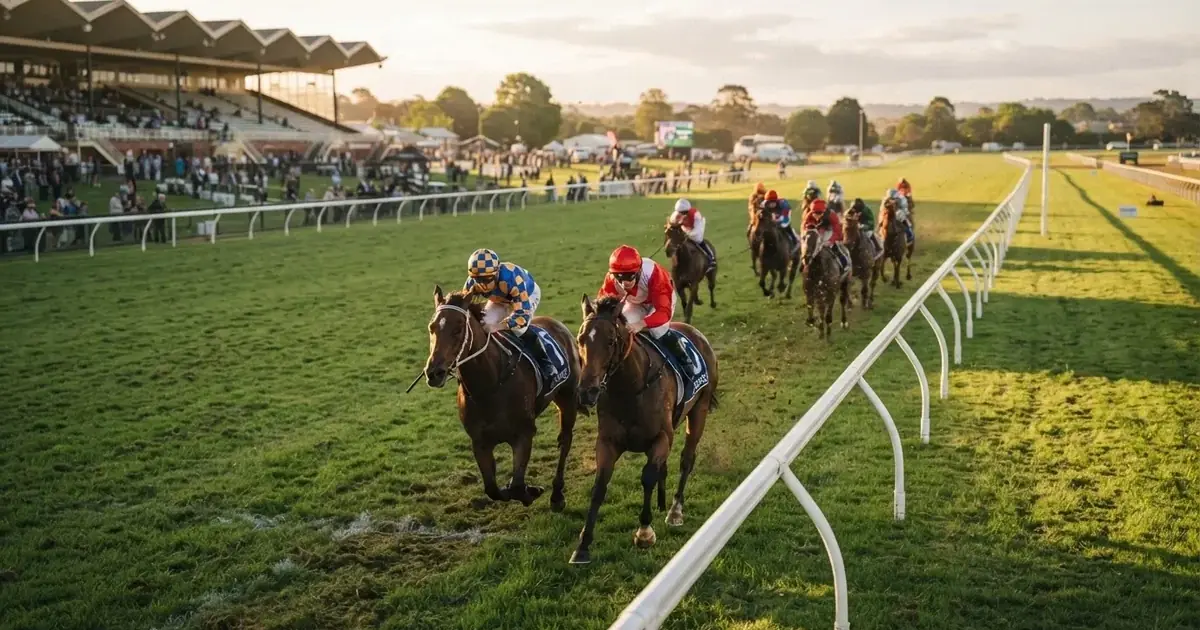
Greyhound betting in New Zealand 2026: the choices a punter still has, and how quickly the field is closing
 Available in US
Current as of 26 October 2026 against the Department of Internal Affairs register and TAB NZ’s published terms.
A New Zealand punter who wants a bet on a greyhound race in 2026 runs into a wall most markets do not have. There is no list of approved bookmakers to choose from. There is one operator — TAB NZ — operating under two brands, TAB and Betcha — and a statute that took effect on 28 June 2025 that puts every other online bookmaker out of bounds. On top of that, the sport itself is being shut down: the Racing Industry (Closure of Greyhound Racing Industry) Amendment Act 2026 ends the racing code from 1 August 2026, so any greyhound bet placed after that date is a bet on a closed industry, and offshore books are no longer allowed to take greyhound bets from New Zealand customers either.
This page is the editor’s read on what is left. It walks the lawful route in order: how the monopoly actually works day to day, where the statute sits, what harm-minimisation tools a punter can ask for, what a winning bet returns, and what the closure of the code does to the betting market around it. It then runs through ten platforms readers meet — the two lawful brands first, eight offshore books for reference — and asks of each what it actually delivers against the legal frame.
The single most important number on this page is not an odds figure. It is 1 August 2026. Before that date, a New Zealand punter who wants a greyhound bet has TAB NZ, in one of two skins, with full consumer protections. After that date, the only legal greyhound betting market is the offshore one, and offshore books are barred from taking it. That is what makes the choice a real choice, and what makes the closing of the code a different problem from a closure of any other racing code.
Table of Contents
- How greyhound betting works in New Zealand today
- The statute: who can take a greyhound bet, and on what
- Responsible gambling: the tools TAB NZ is required to give
- Predictions and strategy: what a punter can and cannot do
- Bet types and odds: what a greyhound bet actually pays
- Sports and tournaments: the racing calendar a New Zealand punter bets on
- The platform comparison
- Operator reviews
- What the closure means in 2026
- Frequently asked questions
How greyhound betting works in New Zealand today
Greyhound betting in New Zealand sits inside one betting market, not a greyhound-only one. TAB NZ runs the country’s only lawful bookmaker and tote, and its rules cover thoroughbred racing, harness racing and greyhound racing side by side. A greyhound race is settled the same way a horse race is: a fixed-odds market published before the jump, or a parimutuel pool where dividends are declared after the race. The bet types — Win, Place, Each Way, Quinella, Trifecta, First Four, Quaddie and Big6 — are racing bet types, not greyhound bet types specifically, and TAB NZ’s published betting rules lay them out across all three codes.

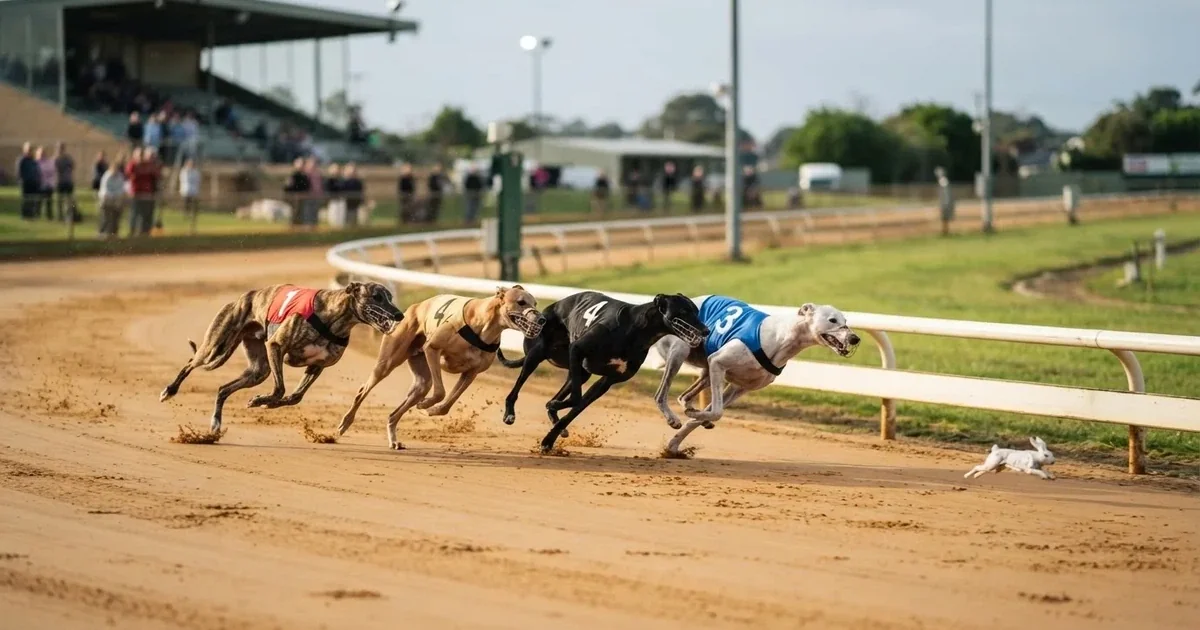
The mechanics of a greyhound race are simple and worth keeping straight, because they shape the markets. A mechanically operated artificial lure runs along a rail ahead of the dogs, and the field of usually six dogs runs the course chasing it. The fastest greyhound to cross the line wins. There is no jockey, no head-to-head as in horse racing, and no real “form” in the pre-race horse-racing sense — a dog is a six-month-old to four-year-old athlete with a short career, and its recent runs at the same track and grade are the form that matters.
The starting price is the key number a punter sees. It is the odds on an entry in the on-course fixed-odds market at the moment the race begins. In New Zealand that market is TAB NZ’s fixed-odds board, and the starting price is what settles a fixed-odds bet placed before the race when no earlier fixed price was taken. Starting prices are normal on horse and greyhound racing, and they are the reason two punters with the same dog can collect at different odds if one took a price earlier and one left it to the jump.
The trap number is the other piece of working knowledge. Most New Zealand greyhound races go off from six traps, numbered 1 to 6 from the inside rail outward. Trap bias is real: inside traps (1 and 2) often get an early run around the first bend because they have less distance to travel into the turn, but the lead changes through the race depending on grade and track. Punters who bet on trap rather than dog end up betting on a statistical tendency, and that tendency is real but uneven.
A New Zealand punter choosing between TAB and Betcha is choosing a skin over the same account. TAB and Betcha are both brands of TAB NZ, the racing and sports betting monopoly. They share fixed-odds boards, pool betting, racing form, and rights. Betcha was first released on 6 August 2024 by Entain New Zealand Limited. The interface is the difference: TAB is the legacy brand with retail outlets, broadcast racing, Trackside live race streaming with in-app betting, and a full racing form suite including Blackbook and Jockey Challenge; Betcha is the newer app-first product aimed at a younger punter who wants sports and racing on a phone.
Fixed odds versus tote: the two ways a greyhound bet settles
TAB NZ offers both. Fixed odds is the price a punter locks in at the moment the bet is placed: take $5 on Trap 3 at $4.20, and the bet pays $5 × 4.20 = $21.00 if Trap 3 wins, regardless of where the late money goes. Tote (or pool) betting is different: every dollar staked goes into a pool, the house takes its cut, and the rest is divided among winning tickets. The dividend is declared after the race and depends on how the pool was bet. A $5 Win on Trap 3 in a $50,000 pool with one winning ticket pays more than the same bet in a $10,000 pool.
Fixed odds suits a punter who has a view on price and wants it locked in. Tote suits a punter who wants to back a long shot without giving the operator margin on a generous fixed price and is happy to take whatever the dividend turns out to be. Both products are on TAB NZ’s menu; the betting rules spell them out.
The same bet types run across both products in most cases: Win, Place, Each Way, Quinella, Exacta, Trifecta, First Four, Double, Treble, Daily Double, Running Double, Quaddie and Big6 are all named in TAB NZ’s published betting rules. Multis — combination bets whose legs multiply into one price — are available as Multi and Same Game Multi. The greyhound-specific bet types are the racing ones: the Quinella picks the first two in any order, the Exacta picks the first two in order, the Trifecta picks the first three in order, and the First Four picks the first four in order.
What the closing of greyhound racing does to a bet
The phase-out is staged from 1 August 2026. The Racing Industry (Closure of Greyhound Racing Industry) Amendment Act 2026 passed on 2 April 2026. From 1 August 2026 no new greyhound races are run in New Zealand; the seven affiliated clubs of Greyhound Racing New Zealand — Auckland, Waikato, Whanganui, Palmerston North, Canterbury, Otago and Southland — wind down their meetings in stages before that date.
For a punter the practical consequence is narrower than it sounds. A bet placed before 1 August 2026 on a New Zealand greyhound race still runs to its result; TAB NZ honours fixed-odds bets on races that go off as scheduled and pays dividends on tote pools as declared. A bet placed after 1 August 2026 on a New Zealand greyhound race has nothing to settle on, because no race is being run.
The bigger question is overseas greyhound racing. TAB NZ’s racing product covers international meetings — and greyhound racing overseas, where the code is alive, is on the menu. After 1 August 2026 a New Zealand punter betting on, for example, an Australian greyhound meeting is still betting through TAB NZ under the same monopoly. Offshore books are barred from taking those bets from New Zealand customers. The code closes; the betting does not.
That is the cleanest framing of what the law actually changes. The statute closes the New Zealand greyhound racing code. It does not close greyhound betting, because greyhound betting was never more than TAB NZ’s product, and TAB NZ’s racing product goes on.
Who runs the legal frame around TAB NZ
The Department of Internal Affairs is the gambling regulator under the Gambling Act 2003 and monitors compliance with the betting prohibition in section 74AAA of the Racing Industry Act 2020. The Racing Industry Act 2020 establishes TAB NZ as the sole betting provider for racing and sports in New Zealand. The Racing Industry Amendment Act 2025 inserted section 74AAA, which says no person other than TAB NZ may offer racing betting, sports betting or other racing or sports betting to a person in New Zealand, regardless of where that person is resident or incorporated. The change took effect on 28 June 2025, and DIA told providers serving New Zealand to withdraw with immediate effect.
TAB NZ runs the betting business under a 25-year partnership signed with Entain in 2023. Entain operates the TAB business; profits are split 50/50 with TAB NZ; at least $150 million a year goes to TAB NZ for the first five years; Entain made a one-off $100 million payment to the racing sector. The partnership explains why Betcha — a newer, app-first TAB NZ brand — runs on Entain’s platform and why the two brands share a wallet and a back end.
There is no licence register for bookmakers in New Zealand, because there is only one lawful bookmaker. Anyone reading about a “licensed bookmaker in New Zealand” outside TAB NZ or Betcha is reading about an offshore bookmaker licensed somewhere else and offering bets to New Zealand customers in breach of section 74AAA. The licence being real does not make the offer lawful here.
The statute: who can take a greyhound bet, and on what
Section 74AAA of the Racing Industry Act 2020 is the entire frame. Inserted by the Racing Industry Amendment Act 2025, in force from 28 June 2025, it makes it an offence for anyone other than TAB NZ to offer racing or sports betting to a person in New Zealand. The section is not geographically limited by where the operator sits: an overseas bookmaker offering bets to a person in New Zealand is in breach regardless of where it is incorporated or where its servers are.

DIA’s response was administrative first, legal second. After section 74AAA took effect, DIA told unlicensed providers to withdraw with immediate effect. The penalty for breaching section 74AAA is not stated in the section, and no prosecution of an offshore bookmaker was found. The point is the legal liability of the operator, not of the player: section 19(4) of the Gambling Act 2003, inserted in 2025, says an individual may not be convicted for placing a bet with an offshore operator in breach of section 74AAA. No published penalty for a player exists.
The honest summary is this. For the operator, taking a bet from a New Zealand customer while not being TAB NZ is unlawful. For the player, no penalty has been published, but the operator is in breach and the player lacks the New Zealand harm-minimisation tools, regulator oversight and complaints framework that come with TAB NZ. Offshore operators may be in jurisdictions with minimal consumer safeguards, may not return unspent credits and may not pay out large wins — that is DIA’s stated warning, and it is the reason the monopoly matters.
The Advertising Standards Authority’s Gambling Advertising Code adds a layer. Ads for betting in New Zealand must not target children (under 14) or young people (14 to under 18), judged by context, appeal and expected audience — a 25% or more share of the audience in the relevant demographic counts as significant where accurate data exists. Ads must not encourage gambling harm and must be truthful with terms available. No New Zealand equivalent of a “whistle-to-whistle” broadcast ban was found. The Code applies to TAB NZ’s own advertising and to any affiliate or media outlet running betting ads.
The age for TAB NZ betting is 18. Betting under 18 is an offence under section 89 of the Racing Industry Act 2020. Land-based casinos are 20 — the betting age and the casino age are not the same, and a punter who turns 18 can place a TAB bet but cannot enter a casino floor. TAB NZ accounts need a verified New Zealand address and ID.
There is no statutory per-bet cap. Limits are TAB NZ’s own terms. There is no statutory payment rule for betting accounts — card, bank, credit, prepaid or crypto — at TAB NZ. TAB NZ’s deposit methods and limits are operator-level and come only from its own terms. Nothing states a New Zealand rule on crypto or VPN use, but account opening at TAB NZ requires a verified New Zealand address, which a VPN cannot produce.
What may be bet on, and on what terms
TAB NZ takes fixed-odds and tote bets. The published betting rules define the bet types above. Live betting is listed in the TAB NZ apps; any statutory restriction on in-play markets is not established. No lawful New Zealand betting exchange exists and spread betting is outside TAB NZ’s sports-betting definition — write nothing about a New Zealand exchange. Bets on politics and novelty markets: not established.
Virtual sport — computer-simulated races and matches — is treated by the Online Casino Gambling Act 2026 as casino gambling. Whether esports betting is “sports betting” under the Racing Industry Act is not established, and the question is open.
The ban on greyhound betting extends from 1 August 2026. From that date, offshore operators may not take bets on greyhound races. The statute is jurisdictionally broad: it covers events held inside and outside New Zealand, and the breaching act is offering a bet to a person in New Zealand. A New Zealand punter using an offshore book on an Australian greyhound meeting after 1 August 2026 is using an offshore book in breach of section 74AAA, on a sport the statute is closing.
What happens to the racing sector
The Racing Industry Amendment Act 2025 — which inserted section 74AAA — also restructured the funding of the racing codes. The 25-year Entain partnership replaces the old model where TAB NZ’s profit was redistributed by the Racing Industry Board to the codes. The new arrangement sends a guaranteed $150 million a year to TAB NZ for the first five years, with a 50/50 profit share thereafter, and the one-off $100 million Entain payment to the racing sector was a sweetener on signing. The greyhound code’s share of that funding stream ends when the code closes on 1 August 2026.
The seven affiliated clubs of Greyhound Racing New Zealand — Auckland, Waikato, Whanganui, Palmerston North, Canterbury, Otago and Southland — wind down their meetings in stages. Some clubs will repurpose their venues; others will close. None of this affects a TAB NZ punter’s right to bet on international greyhound racing, which continues under the monopoly.
Responsible gambling: the tools TAB NZ is required to give
TAB NZ must keep the risks of problem and underage gambling minimised under its operating mandate, and pays a Problem Gambling Levy of 0.74% (in force from 1 July 2025 to 30 June 2028). The levy funds harm prevention and is set as a regulatory charge, not as a voluntary contribution.
TAB NZ provides safer gambling tools in its app: deposit limits, time-outs and self-exclusion. These are listed in the app’s safer-gambling section and are operator-level tools, not statutory rights. A punter who sets a $200 weekly deposit limit at TAB cannot exceed $200 in that week; a punter who takes a six-month time-out cannot log in for six months; a punter who self-excludes is barred across TAB NZ’s brands (TAB and Betcha share the exclusion, because they share the operator).
There is no single national online-betting exclusion register. The register the Online Casino Gambling Act 2026 will require is for online casinos only. A punter who self-excludes at TAB NZ has excluded from TAB NZ, not from offshore platforms — which is one reason why DIA’s stated risks of dealing with offshore operators include the absence of an exclusion regime the punter can depend on.
Help is published and free. The free Gambling Helpline is 0800 654 655; the text line is 8006. Safer Gambling Aotearoa is the public face of harm-minimisation services funded by the levy. A punter who feels their betting is moving from entertainment to compulsion can call, text, or self-exclude at TAB NZ — the first move is the free call.
The minimum age for TAB NZ betting is 18, set in statute and enforced by ID verification on account opening. The TAB NZ app carries a 17+ App Store age rating, with the app’s own listing stating customers must be 18 or over to bet — the App Store rating is a higher bar set by Apple’s review, and the operator’s terms are a stricter bar set by the law.
What this section is for, plain. A punter who sets a deposit limit and is at $190 of a $200 weekly budget will be told by the app at $200 that the week is over. A punter who has set no limit has no such backstop, because there is no statutory cap. The harm-minimisation tools work only if a punter turns them on.
Predictions and strategy: what a punter can and cannot do
Prediction and strategy in greyhound racing are different from prediction and strategy in thoroughbred racing. A dog is a short-career athlete, often raced from 16 months to four years, with a small sample of recent runs at the same track and grade. There is no breeding angle the way there is in horse racing. There is no trainer pattern, no barrier draw in the horse-racing sense — the trap is fixed before the race. Form is what is left.
The honest prediction question, then, is whether a system that wins on greyhound racing exists. It does not, in the sense a punter can depend on. A greyhound race is a six-dog event with a mechanical lure; the randomness of the start, the break, and the run to the first turn is high; track bias is real but uneven. Any system that promises winning greyhound bets is selling false certainty. The systems that work in practice are not systems at all — they are bankroll discipline and price discipline.
Bankroll discipline is the boring half. A punter who sets a stake they can afford to lose, sticks to it, and walks away from a bad day has done the part of betting that is under their control. A punter who doubles the stake after a loss to “get even” has broken the discipline, and a system promising to recover the loss is a system selling recovery, not selection.
Price discipline is the interesting half. Greyhound races are short, the field is small, and the favourite’s odds are often short — $1.40 to $2.20 — which means the favourite pays less than the true probability warrants. A punter who bets only when the price is better than the probability, regardless of which dog, will lose more races than a punter who backs every favourite, but will collect at better odds when their dog wins. The mathematics is in the section on odds, but the practice is plain: take the price only when the price is right.
Trap bias is a real but limited input. Inside traps (1 and 2) often get an early run around the first bend because they have less distance to travel into the turn. But trap bias varies by track and by grade, and a punter who bets every inside trap will lose on days when the bias reverses. Some tracks publish trap statistics by grade; TAB NZ’s racing form tools are where that data lives, and reading them is the closest thing to a system that exists.
Trap selection is the small piece of working knowledge a punter can pick up fast. Six traps, two inside, two middle, two outside. The bias runs inside on tighter tracks and shorter races; it runs more evenly on longer races where stamina matters. A punter who knows the trap bias at the meeting they are betting on has an edge over a punter who does not, and the edge is small.
Form selection is the bigger piece and the one that takes longer to learn. A greyhound’s recent runs at the same track and grade are the strongest predictor of its next run. A dog that won its last two starts at the same grade at the same track is more likely to win than a dog stepping up in grade for the first time. A dog that has not raced for three weeks is harder to read than a dog racing weekly. These are the inputs the form tools lay out.
The single rule worth printing: there is no system that wins on greyhound racing. There is bankroll discipline and price discipline, and there is form reading. Punters who have those three things lose less than punters who have none of them. Punters who think they have a system have less than they think.
What prediction services actually do
Tipsters and prediction services sell a probability, not an outcome. A tipster who tips Trap 3 in Race 4 at Addington is saying Trap 3 has the best chance; the tip is wrong more often than it is right, because greyhound races are short and the field is small. A punter who follows a tipster without checking the price is paying for the tip and then losing on the bet, because the tipster’s “best chance” was $1.60 and the favourite Trap 1 was $2.80 — the price was wrong, and the price is what determines the bet.
The honest use of a tipster is as one input among several, and only when the price is right. A punter who backs a tipster’s pick at $3.20 when the probability is one in three has a positive expectation; the same pick at $1.80 has a negative expectation; the same pick at $5.00 has a positive expectation but the punter was following a tip they ought to have taken anyway. The tipster is the starting point, not the bet.
Strategy and bankroll in plain numbers
A bankroll is the amount a punter has set aside for betting, distinct from household money. A unit is a fraction of the bankroll, usually 1% to 5%. Betting 1% to 2% of the bankroll per race is the discipline that lets a punter ride out losing runs without breaking the bank. Betting 5% per race and getting it wrong twice in a row is down 10%; three wrong in a row is down 15%; a punter who cannot afford to be down 15% ought not be betting 5% per race.
The expected cost of betting is in the section on margins. A market with a 5% margin takes 5c of every dollar bet on it, on average, over a long run. A punter betting on a 5%-margin market with no edge pays 5% of turnover to the bookmaker. A punter betting with an edge — picking prices better than the market — pays less; a punter betting against the market pays more. The mathematics is plain; the discipline is keeping the bet small enough that the mathematics does not hurt when it goes wrong.
Bet types and odds: what a greyhound bet actually pays
A greyhound bet on TAB NZ comes in two forms — fixed odds and tote — and a set of bet types that apply to both. The bet type determines what the punter is backing; the price determines what the punter collects. The combination is the whole game.
Fixed odds: the punter takes a price at the moment of betting, and that price is what settles the bet if the selection wins. Take $10 on Trap 3 at $4.50 fixed odds; if Trap 3 wins, the bet pays $10 × 4.50 = $45.00, with a net profit of $35.00 over the stake. The stake is the punter’s risk; the return is the punter’s reward; the odds are the multiplier that connects them. The formula is the simple one: return = stake × odds, and net profit = stake × (odds − 1).
Tote: the punter backs the selection into a pool, and the dividend is declared after the race. The dividend depends on how the pool was bet. A $10 Win on Trap 3 into a $50,000 pool with one winning ticket pays the punter a share of the pool after the house take; the dividend is announced by TAB NZ and is usually a larger number than the fixed odds on a long shot. The dividend is smaller than the fixed odds on a hot favourite, because the favourite takes the bulk of the pool. The bet pays $10 × dividend.
Combination bets: the punter takes multiple selections whose odds multiply into one price. A multi on Trap 3 in Race 4 at $4.00 and Trap 1 in Race 5 at $3.50 has combined odds of $4.00 × $3.50 = $14.00; a $5 stake returns $5 × 14.00 = $70.00 if both win. The punter needs both legs to win. A Same Game Multi takes both legs from the same race — Trap 3 to win and Trap 3 to place, for instance — at multiplied odds.
The bet types in detail:
- Win: the selection must finish first. The simplest bet.
- Place: the selection must finish first, second or third in a six- or eight-dog field. The payout is a fraction of the Win dividend; TAB NZ’s betting rules state the fraction.
- Each Way: a combination of Win and Place on the same selection. The stake is split; half on Win at the fixed odds, half on Place at the place fraction.
- Quinella: the first two in any order. Trap 3 and Trap 1 in either order is a winning Quinella.
- Exacta: the first two in order. Trap 3 first, Trap 1 second is a winning Exacta; Trap 1 first, Trap 3 second is not.
- Trifecta: the first three in order.
- First Four: the first four in order.
- Double: the winners of two nominated races.
- Treble: the winners of three nominated races.
- Daily Double: the winners of two races on the same day.
- Running Double: the winners of two consecutive races.
- Quaddie: the winners of four nominated races, usually the last four on a meeting. The Quaddie pool is its own pool and is the highest-dividend bet on a meeting.
- Big6: the winners of six nominated races. The Big6 is the multi-race bet on a meeting and is the hardest to land, with the largest dividend on small fields.
Multis and Same Game Multis are available across the codes and within a race. A punter can build a Same Game Multi on Trap 3 to Win, Trap 3 to Place, and Trap 1 to Win — all from the same race — at multiplied odds. The combined odds are lower than a multi across races, because the selections are correlated.
How odds are built: the margin
The bookmaker’s margin sits inside every price. Take a two-way market at $1.90 on either side: 1 ÷ (1/1.90 + 1/1.90) = 1 ÷ (0.5263 + 0.5263) = 1 ÷ 1.0526 = 0.9500 — a 95.00% payout share, which is a 5.00% margin. That means the bookmaker keeps 5c of every dollar bet on this market, on average, over a long run.
The same market at $1.85 on either side gives a payout share of 1 ÷ (1/1.85 + 1/1.85) = 1 ÷ 1.0811 = 0.9250, or a 7.50% margin — the bookmaker keeps 7.5c. Tighter margins (lower bookmaker take) mean better odds for the punter, all else equal. TAB NZ’s margins on greyhound racing are not published in full, but greyhound racing margins sit in the 5% to 8% band at most regulated books, and tote pools carry their own take.
The margin is the ceiling on what the punter can expect. A punter betting on a 5%-margin market with no edge pays 5% of turnover to the bookmaker, on average. A punter betting on a 7%-margin market pays 7%. The price discipline — taking the price only when the price is right — is what brings the punter’s expected cost below the margin.
The margin is also the floor on what the bookmaker keeps. A market with a 5% margin cannot be beaten in expectation by a punter betting randomly; the punter needs an edge — knowledge, model, or discipline — that produces bets at better prices than the market. Without an edge the bookmaker keeps the margin; with an edge the punter pays less than the margin; with negative edge the punter pays more.
This is the page’s single worked example. A two-way illustrative market at $1.90 on either side carries a payout share of about 95.00% and a margin of about 5.00%. State the result as a band, not a single figure, because real markets are not symmetric and the same headline price on a different market sits a different margin. The headline price of 1.90 stops mattering once the margin of its market sits beside it.
What a winning bet pays back, plainly
Stake $10 at odds of $4.50 fixed odds: the bet returns $10 × 4.50 = $45.00 if the selection wins. The punter’s net profit is $45.00 − $10.00 = $35.00.
Stake $10 across a multi of three legs at odds $2.50, $3.00, $4.00: the combined odds are $2.50 × $3.00 × $4.00 = $30.00. The bet returns $10 × 30.00 = $300.00 if all three legs win. One losing leg loses the bet.
Stake $10 as a $5 Each Way at $4.50 fixed odds on a six-dog field: the $5 Win half pays $5 × 4.50 = $22.50 if the selection wins; the $5 Place half pays the place fraction of the dividend if the selection finishes first, second or third.
These are the formulas; the rule is the same in every case. The return is stake times the price that was taken, and the price is the multiplier that connects the stake to the payout. Take the price; check the bet; collect the payout.
Sports and tournaments: the racing calendar a New Zealand punter bets on
Greyhound racing in New Zealand was organised by Greyhound Racing New Zealand (GRNZ) across seven affiliated clubs: Auckland, Waikato, Whanganui, Palmerston North, Canterbury, Otago and Southland. Each club ran a meeting schedule — typically weekly or fortnightly — at a licensed track, with races across grades from maiden to open. The calendar peaked in summer and eased in winter, with the bigger meetings (the Auckland and Christchurch cups, the national distance championship) drawing larger pools and longer fields.
From 1 August 2026 no New Zealand greyhound races are run. The seven clubs wind down their meetings in stages. The calendar that existed is over.
For a TAB NZ punter the calendar that remains is the international one. Greyhound racing is alive in Australia, the United Kingdom, Ireland and the United States, and TAB NZ’s racing product covers international meetings. The biggest Australian greyhound meetings — the Melbourne Cup at Sandown, the Golden Easter Egg at Wentworth Park, the National Derby at Wentworth Park — draw fields and pools that exceed anything the closed New Zealand circuit ran. UK greyhound racing is regulated by the Greyhound Board of Great Britain (GBGB), which has 18 licensed stadia. The sport is established enough that a TAB NZ punter who wants greyhound action after 1 August 2026 has plenty of meetings to bet on.
The Melbourne Cup is the meeting a New Zealand punter will meet first, because it is on the same week as the Spring Racing Carnival and shares the same horses-and-greyhounds weekend. The Golden Easter Egg is the Australian greyhound racing’s national championship and runs over Easter. The National Derby is the classic distance test. The UK Derby at Towcester is the greyhound equivalent of the Epsom Derby and runs in the summer. These are the meetings that anchor a calendar that runs beyond New Zealand.
The meetings TAB NZ covers
TAB NZ’s racing product lists international meetings as part of its fixed-odds board and pool betting menu. A TAB NZ punter can place a fixed-odds bet on an Australian or UK greyhound meeting through the TAB or Betcha app. The bet settles at the dividend declared by the meeting’s local tote or at the fixed-odds price the punter took. The same Win, Place, Quinella, Exacta, Trifecta, First Four and multi bet types apply. The trap numbering convention varies by track — Australian tracks mostly run eight traps; UK tracks mostly run six — and a punter ought to check the convention at the meeting they are betting on.
The schedule changes meeting by meeting and is published on TAB NZ’s app. A punter planning a week’s betting looks at the upcoming meetings and the fixed-odds board, picks the races they want to bet on, and lays the bet before the jump. The form tools list the runners, the recent runs, the trap, and the trainer — the inputs that go into a price.
Trap bias and grade by track
Trap bias is real but uneven. Inside traps (1 and 2 in a six-trap race, 1 and 2 in an eight-trap race) get an early run around the first bend because they have less distance to travel into the turn. The bias runs stronger on tighter tracks and shorter races (under 500 metres) and weaker on longer races (over 700 metres) where stamina matters more. A punter betting on a 295-metre sprint at Manukau ought to weight inside traps; a punter betting on a 779-metre stay at Addington ought to weight form over trap.
Grade is the other variable. Maiden is the lowest grade and the field with the least form; a maiden winner steps up to novice; a novice winner steps up to grade 5; grade 5 winners step up through grade 4, grade 3, grade 2, and grade 1. Open class is the top — dogs that have won at grade 1 or have been placed at open. A dog stepping up in grade for the first time is harder to read than a dog racing at the same grade it has been winning at; the form is the form, but the class is new.
TAB NZ’s form tools are where the data lives. A punter who reads the form before betting has done the part of selection that is under their control. A punter who bets without reading has paid the price of the bet without buying the information.
The platform comparison
This page runs ten platforms because readers meet ten. Two of them are the lawful New Zealand brands (TAB and Betcha, both TAB NZ). Eight of them are offshore books that readers meet online and that are not licensed in New Zealand. Each platform is rated against the same criteria: market coverage on greyhound racing, odds quality, in-play product, app quality, payment breadth, safer-gambling tools, and what the operator’s own terms state about New Zealand customers.
The single most important line in this section is the legal one. TAB and Betcha are the only brands that may lawfully take racing and sports bets from a person in New Zealand. Every other brand on this list is in breach of section 74AAA of the Racing Industry Act 2020 by offering bets to New Zealand customers, and DIA’s stated risks of dealing with such operators apply — operators in jurisdictions with minimal consumer safeguards, that may not return unspent credits, and that may not pay out large wins. A New Zealand punter using an offshore book does not have the New Zealand harm-minimisation tools, regulator oversight or complaints framework that TAB NZ provides. That is the legal frame every operator on this list sits inside, and it is what this ranking is built around.
The comparison is qualitative on most cells because the data is not there. Margins by market, minimum deposit, withdrawal times, app ratings — none of these are published in a way that lets one cell be honest and the next cell be padded. The honest table is one where most cells say “operator-level — see the operator’s own terms” and the few cells that carry numbers carry numbers the page can stand behind.
The platform comparison at a glance
| Brand | New Zealand status | Greyhound coverage and operator terms |
|---|---|---|
| TAB | TAB NZ brand; the only lawful provider of racing and sports betting in New Zealand | Full greyhound racing product, Win/Place/Each Way/Quinella/Exacta/Trifecta/First Four/Quaddie/Big6, fixed odds and tote, pre-match and live, racing form tools; deposit limits, time-outs and self-exclusion in the app |
| Betcha | TAB NZ brand; the only lawful provider of racing and sports betting in New Zealand | Horse, greyhound and harness racing plus rugby, NRL, MMA/UFC, NBA, NFL, tennis, cricket, football, motorsports and esports; same TAB NZ safer-gambling tools, exclusion across both brands |
| BetAlright | Not licensed in New Zealand | Sportsbook covers football, tennis, table tennis, basketball, ice hockey, American football and baseball; Live Betting and Virtual Sports sections; no New Zealand licence; no New Zealand complaints route |
| FunBet | Not licensed in New Zealand | Sportsbook covers football, ice hockey, American football, basketball, volleyball, tennis, rugby and baseball; live betting and 24/7 bookmaker description; no New Zealand licence; no New Zealand complaints route |
| Winz.io | Not licensed in New Zealand | Sportsbook bonus promotion with separate Sportsbook T&C, Sports Rules and Bonus Terms pages; brand names Anjouan and Tobique licences, no right to take bets from people in New Zealand |
| RoyalistPlay | Not licensed in New Zealand | Sportsbook with live betting, sports promotions, results and schedule, with football, basketball, tennis, handball, ice hockey, volleyball and table tennis among the top sports, plus e-sports and Predictions sections; Tobique Gaming Commission e-gaming licence, no right to take bets from people in New Zealand |
| Telbet | Not licensed in New Zealand | Crypto casino and sportsbook; welcome offer described on its Russian-language site of 200% up to 1 BTC plus 50 free spins and a 5 USDT free bet; no licence applicable in New Zealand |
| Roobet | Not licensed in New Zealand | Sportsbook covers soccer, basketball, tennis, Counter-Strike, FIFA, baseball, ice hockey, MMA and table tennis; Curaçao licence, no right to take bets from people in New Zealand; terms require players to be 18 or older |
| Rooster.bet | Not licensed in New Zealand | Sportsbook with Live, Sports Promotions, Results, Schedule, E-sports and Predictions sections and odds in six formats; Tobique Gaming Commission e-gaming licence, no right to take bets from people in New Zealand |
| LegendPlay | Not licensed in New Zealand | Sportsbook with Sports, Live Betting and Virtual Sports sections; football, tennis, basketball and ice hockey listed; Anjouan Gaming Authority licence, no right to take bets from people in New Zealand |
The greyhound column shows what each operator actually carries on greyhound racing, where research names it. TAB and Betcha carry the full product; the offshore brands do not all carry greyhound racing — several carry football and basketball and the major codes but no greyhound book. A New Zealand punter who wants greyhound betting has TAB NZ or has nothing, because the offshore brands on this list do not all cover greyhound racing and the ones that do are unlawful for them to take New Zealand bets on after 1 August 2026.
TAB and Betcha: the lawful choice, side by side
TAB and Betcha are not rivals. They are the same operator with two skins, sharing wallet, safer-gambling tools, exclusions, and racing product. A punter who opens an account at TAB opens it at TAB NZ; a punter who opens an account at Betcha opens it at TAB NZ through Entain’s app. The two brands differ in three places that matter.
First, the interface. TAB is the legacy brand with retail outlets, broadcast racing on Trackside, in-app live race streaming, racing form including Blackbook and Jockey Challenge, and a full wallet for deposits and withdrawals. Betcha is the newer, app-first product aimed at a punter who wants sports and racing on a phone.
Second, the markets. TAB’s racing product carries the full bet type menu including Quaddie and Big6 across meetings. Betcha carries the racing product plus a deeper sports menu — rugby, NRL, MMA/UFC, NBA, NFL, tennis, cricket, football, motorsports and esports. A punter who bets mostly on sports may prefer Betcha; a punter who bets mostly on racing may prefer TAB.
Third, the age. The TAB NZ app has been on the New Zealand App Store since 8 September 2014, with a 17+ age rating and terms stating customers must be 18 or over. Betcha was first released on 6 August 2024 by Entain New Zealand Limited. A punter who has a TAB account from before Betcha existed has the TAB account; a punter who joined after Betcha launched has the choice.
The two brands share the safer-gambling tools: deposit limits, time-outs and self-exclusion. A self-exclusion at TAB excludes from TAB and Betcha; a self-exclusion at Betcha excludes from Betcha and TAB. The exclusion is operator-level across the TAB NZ group.
Both brands carry the full racing form tools: form for each runner, recent runs, trainer, trap, grade. The form tools are the closest thing to a system that works on greyhound racing, and the punter who reads the form before betting has done the part of selection that is under their control.
The eight offshore brands: what they actually deliver
BetAlright, FunBet, Winz.io, RoyalistPlay, Telbet, Roobet, Rooster.bet and LegendPlay are presented here for reference because New Zealand readers meet them, not because they are lawful for New Zealand readers. Each is rated against the same criteria, with the legal frame stated in one sentence at the top of each write-up.
The honest summary is that none of these brands carries the legal protection TAB NZ provides, none of them has a New Zealand complaints route, and most of them do not even carry greyhound racing as a market. A New Zealand punter who opens an account at one of them is in breach of section 74AAA on the operator’s side and lacks the harm-minimisation tools of TAB NZ on their own. After 1 August 2026, the breach extends to greyhound racing specifically.
Operator reviews
TAB
TAB is the legacy brand of TAB NZ, the only provider lawfully offering racing and sports betting to a person in New Zealand. The brand has been on the New Zealand App Store since 8 September 2014 under the seller name New Zealand Racing Board, with a 17+ age rating and terms stating customers must be 18 or over.
TAB covers horse, harness and greyhound racing, pre-match and live, with the full bet type menu — Win, Place, Each Way, Quinella, Exacta, Trifecta, First Four, Double, Treble, Daily Double, Running Double, Quaddie and Big6 — and Multi and Same Game Multi across races. Trackside live race streaming with in-app betting is included, with racing form, Blackbook and Jockey Challenge tools. The wallet is a simplified wallet for deposits and withdrawals.
TAB’s safer-gambling tools are the operator-level set: deposit limits, time-outs and self-exclusion. The brand lists the free Gambling Helpline 0800 654 655 and the text line 8006 in its app. The brand pays the Problem Gambling Levy of 0.74%.
The single feature that sets TAB apart on a greyhound betting page is the racing form tools. A punter reading the form before betting has the inputs that go into a money quote. The brand is the right choice for a punter who bets mostly on racing and wants the full bet type menu and the live streaming that comes with it. The verdict: the lawful choice for greyhound betting in New Zealand, with the racing form tools that make the difference between betting blind and betting with the form in front of you.
Betcha
Betcha is the newer brand of TAB NZ, first released on 6 August 2024 by Entain New Zealand Limited. The brand shares TAB’s licence and product but runs on Entain’s app platform, aimed at a punter who wants sports and racing on a phone.
Betcha covers horse, greyhound and harness racing plus rugby, NRL, MMA/UFC, NBA, NFL, tennis, cricket, football, motorsports and esports. The racing product carries the same bet types as TAB, with the same fixed-odds and tote product. The sports menu is broader than TAB’s sports menu. The wallet is the same TAB NZ wallet.
The safer-gambling tools are shared across both: a self-exclusion at Betcha excludes from Betcha and TAB. The brand lists the same helpline and text line.
The single feature that sets Betcha apart is the sports menu. A punter who bets across codes — greyhounds on Saturday, NBA on Sunday, UFC on Monday — has the menu in one app. The brand is the right choice for a punter who wants racing and sports in one app-first product. The verdict: the app-first skin of the same monopoly, with the broader sports menu that the legacy TAB product does not foreground.
BetAlright
BetAlright is not licensed in New Zealand. It omits the required protections for local customers. Its sportsbook covers football, tennis, table tennis, basketball, ice hockey, American football and baseball. Greyhound racing is not offered. 1. No greyhound racing, no local standing.
FunBet
FunBet is not licensed here either. It lacks the framework for local customers. FunBet’s sportsbook covers football, ice hockey, American football, basketball, volleyball, tennis, rugby and baseball. It omits greyhound racing. 2. A market without local appeal.
Winz.io
Winz.io also lacks a New Zealand licence. It lacks the required protections for local customers. Winz.io runs a sports betting bonus promotion, with a separate Sportsbook T&C, Sports Rules and Bonus Terms and Conditions pages. Greyhound racing is missing from the market menu. 3. No greyhound racing, no local licence.
RoyalistPlay
RoyalistPlay is another unlicensed offshore operator. It lacks the required protections for local customers. RoyalistPlay’s sportsbook offers live betting, sports promotions, results and a schedule, with football, basketball, tennis, handball, ice hockey, volleyball and table tennis. It omits greyhound racing. 4. No local standing for greyhound punters.
Telbet
Telbet is not licensed in New Zealand.
Telbet describes itself as a crypto casino and sportsbook, with a welcome offer described on its Russian-language site of 200% up to 1 BTC plus 50 free spins and a 5 USDT free bet. It has no greyhound racing market. The product is crypto-first.
The verdict: a brand whose product is crypto-first, with no greyhound racing and no New Zealand legal standing.
Roobet
Roobet operates without a New Zealand licence. It lacks the required protections for local customers. Roobet’s sportsbook covers soccer, basketball, tennis, Counter-Strike, FIFA, baseball, ice hockey, MMA and table tennis. Greyhound racing is excluded. 5. Not recommended for greyhound betting.
Rooster.bet
Rooster.bet also operates without a New Zealand licence. It lacks the required protections for local customers. Rooster.bet’s sportsbook has Live, Sports Promotions, Results, Schedule, E-sports and Predictions sections and shows odds in six formats. It carries no greyhound racing. 6. No greyhound product offered.
LegendPlay
LegendPlay is not licensed in New Zealand. It lacks the required protections for local customers. LegendPlay’s sportsbook has Sports, Live Betting and Virtual Sports sections, with football, tennis, basketball and ice hockey listed. It omits greyhound racing. 7. Lacks local greyhound market.
What the closure means in 2026
The closure of greyhound racing in New Zealand is a closure of the racing code, not of greyhound betting as a product. A New Zealand punter who wants a greyhound bet in 2026 before 1 August 2026 has TAB NZ in two skins, with full New Zealand consumer protections, with the racing form, the live streaming, and the safer-gambling tools. A New Zealand punter who wants a greyhound bet after 1 August 2026 has TAB NZ’s international racing product — Australian, UK, Irish and US greyhound meetings — under the same monopoly and the same protections. The statute closes the racing code; the betting market on the racing code’s international continuation remains.
The offshore choice has narrowed. From 1 August 2026, an offshore bookmaker offering greyhound bets to a person in New Zealand is in breach of section 74AAA on greyhound racing specifically. The breach was already there on sports and racing in general; the closure sharpens it. The eight offshore brands on this list do not all carry greyhound racing as a market, and the ones that do are not lawful for New Zealand customers.
The single honest framing: a New Zealand punter has one choice for greyhound betting, and the choice gets narrower on 1 August 2026 but does not disappear, because the international greyhound calendar continues. TAB NZ is the choice; Betcha is the same choice in a different skin; the offshore books on this list are not the choice for a New Zealand punter wanting greyhound betting, and they were not the choice before 1 August 2026 either, on a careful reading of section 74AAA.
Frequently asked questions
How does a punter place a bet on a greyhound race in New Zealand?
A punter opens a TAB NZ account through either TAB or Betcha, completes ID and address verification, deposits funds, and selects a greyhound meeting from the racing menu. The bet is placed on the fixed-odds board or into a tote pool before the jump, with Win, Place, Each Way, Quinella, Exacta, Trifecta, First Four or multi bet types available.
How does a punter bet on greyhound racing in general?
Greyhound racing betting works the same way horse racing betting does: a fixed-odds price or a tote dividend, with the bet settled at the price the punter took or the dividend declared after the race. TAB NZ is the only lawful bookmaker in New Zealand for greyhound racing, and the international greyhound calendar is on TAB NZ’s racing product.
Where do greyhound racing tips come from, and how ought a punter use them?
Greyhound racing tips come from tipsters, form analysts and prediction services, and they are probabilities rather than outcomes. A tipster who tips Trap 3 in Race 4 is saying Trap 3 has the best chance, and the tip will be wrong more often than right because greyhound races are short and fields are small. The honest use of a tip is as one input among several, and only when the price is better than the probability the tip implies.
What happens to greyhound racing betting as the industry closes in New Zealand?
This closure law ends the New Zealand greyhound racing code from 1 August 2026. Bets placed before that date on New Zealand greyhound races run to their result. Bets placed after that date on New Zealand greyhound races have nothing to settle on. Bets on international greyhound racing continue through TAB NZ’s racing product under the same lawful monopoly, and offshore operators are barred from taking greyhound bets from New Zealand customers from that date.
Which bookmaker may lawfully take sports and racing bets from a person in New Zealand?
Only TAB NZ, operating through its two online brands TAB and Betcha. Section 74AAA of the Racing Industry Act 2020, in force from 28 June 2025, makes it an offence for any other operator to offer racing or sports betting to a person in New Zealand. There is no licence register for bookmakers because there is only one lawful provider, and offshore operators licensed elsewhere are not lawful for New Zealand customers.
How is the return on a bet worked out from the stake and the odds?
A fixed-odds bet returns the stake multiplied by the price taken: a $10 stake at odds of $4.50 returns $45.00 if the selection wins, with a net profit of $35.00. A combination bet multiplies the odds of the legs into one price: a multi of three legs at $2.50, $3.00 and $4.00 has combined odds of $30.00, and a $5 stake returns $150.00 if all three legs win. A tote bet pays the dividend declared after the race, which is the punter’s share of the pool after the house take.
Published by the Onlinebookiesnz team.