
What cricket betting in New Zealand actually costs the punter
 Available in US
In New Zealand there is exactly one lawful online bookmaker for sports and racing: TAB NZ, operating under the brands TAB and Betcha. Everyone else taking bets from a person in New Zealand is breaking section 74AAA of the Racing Industry Act 2020, which has been in force since 28 June 2025. That single fact shapes everything that follows — which cricket markets you can bet on, who you are betting with, what safer-gambling tools sit on your account, and what the prices are built from. The page below is built around that frame: what a bet is, where it goes, what it pays, and what it costs the punter along the way. The figures are current as of 26 October 2026 and were checked against the Department of Internal Affairs register and TAB NZ’s own published terms.

Table of Contents
- Cricket odds and the markets they price
- Tournaments and what gets priced
- How this site ranks the ten brands
- The legal frame: one bookmaker, one law
- Safer gambling: what TAB NZ provides and what offshore does not
- Crypto, anonymity and account opening
- Mobile and the app
- Live betting and cash out
- Predictions, tips and strategy
- Operator reviews
- What a price is built from: the margin
- Bonuses, free bets and the actual cost
- Tax and what the punter pays
- How a New Zealand punter is meant to compare the ten brands
- What the punter checks before betting
- Frequently asked questions
Cricket odds and the markets they price
Cricket odds are decimal prices, the same format as every other sport in the TAB NZ app. A price of 2.10 means a $10 stake returns $21 — your $10 back, plus $11 of profit. A price of 1.50 means a $10 stake returns $15. The lower the price, the more the bookmaker thinks that outcome is likely; the higher it climbs, the more that outcome is paying for being the underdog. Cricket has more match types than most sports, and each one settles differently, so the market list below reads from the format the punter is actually betting on.
Match winner and series result
The most common cricket market is the match winner — who wins the game, draw or no result included where the format allows. Test cricket can be drawn; ODIs and T20s cannot. So a Test winner market has three outcomes (home win, away win, draw) and a one-day market has two (home win, away win) plus a tie that some books price and others settle at the stake. Series result markets run across multiple matches and pay on the series winner, with the draw settled differently in Test series (1-1, 1-0, 0-1, 0-0) than in ODI or T20 series where tied series are rare. A two-way match winner on a Test with the draw quoted pushes the price of each side out — the draw takes a slice of the book. A one-day match winner with no draw quoted gives the punter a cleaner two-way price and a tighter margin baked in.

Tied match and “no result”
Cricket is one of the few sports where “no result” is its own outcome rather than a refund. In ODIs, if the chasing side is bowled out or runs out of overs with the scores level the match is a tie — most books price the tie as a third runner. In T20s, a tie goes to a super over; some books price the super-over result, others settle on the tied price. In Test cricket, a draw is a live outcome for five days and is priced the whole way through. “No result” applies when too few overs are bowled — usually fewer than 20 in an ODI — and the match is abandoned rather than completed. A no-result bet is most often refunded, but that depends on the market: a top-batsman bet on a player who never comes in can be void even when the match result is settled, because the bet never had a fair chance to win.
Top batsman, top bowler, man of the match
Player markets are the part of cricket that looks the most like NFL player props. Top batsman pays on the run-scorer with the most runs in an innings; top bowler pays on the wicket-taker with the most wickets. Man of the match is decided by the match-award panel, which is not always the top run-scorer or wicket-taker — a game-changing cameo with the ball or a sharp catch can win the award. The risk on these markets is non-participation: a player named in the side but rested before the toss, or who bats at number eleven and never comes in, is voided on most top-batsman bets. The punter pays for that risk in the price: a marquee player at the top of the order usually sits at the short end of the market, and the long tail runs to $20 or beyond on a number-eleven who never bats.
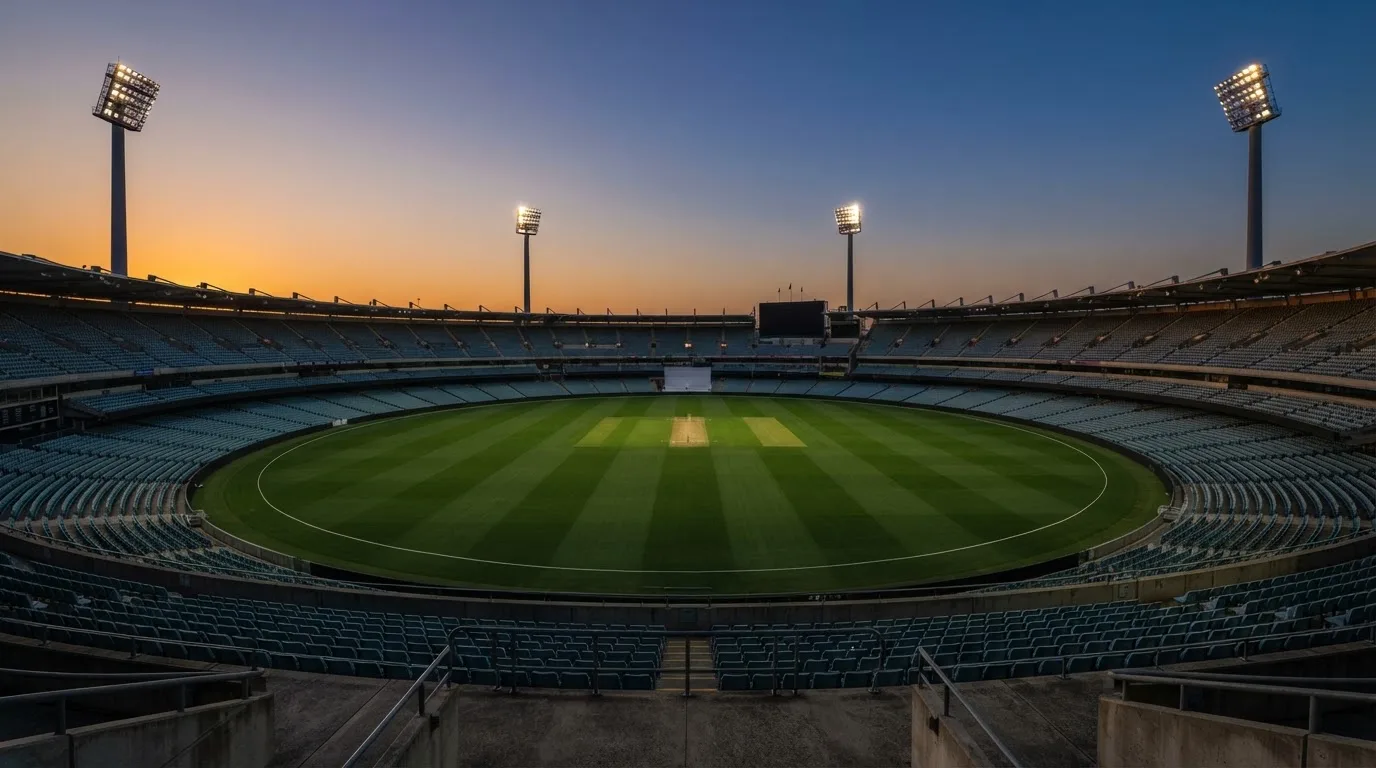
Over/under runs and player milestones
Over/under lines on team totals, partnership totals and individual scores are the cricket version of NFL totals. The line moves with the pitch, the weather and the form of the openers. Player milestones — $50 for a top-order bat, a century, a five-wicket haul — are priced on probability multiplied by a margin, the same as every other market. The trap is the dead-rubber effect: a side already 3-0 down in a five-match series has no reason to send its frontline quicks in for a fourth match, and a “top bowler” bet on the rested strike bowler is void before the toss.
Method of dismissal, fall of next wicket, next over runs
The exotic markets are where cricket betting shows its depth. Method of dismissal (bowled, caught, LBW, run out, stumped, hit wicket) is a six-way market and prices accordingly. Fall of next wicket is a number market on the team total when the next wicket falls. Next-over runs is a fast in-play market on the runs scored in a specific over, which is the closest cricket comes to a tennis point-by-point market. Each of these has a wider margin than the match-winner market — the more outcomes the book has to price, the more it keeps, and the punter pays for the entertainment of betting on something specific.
Tournaments and what gets priced
Cricket is governed by the International Cricket Council, which has twelve full members that hold Test status. The ICC’s three headline events are the Cricket World Cup (50-over, every four years), the T20 World Cup (every two years), and the World Test Championship, which has run a final since 2019. India won the 2026 ICC Men’s T20 World Cup, played between 7 February and 8 March 2026 and co-hosted by India and Sri Lanka, beating New Zealand by 96 runs in the final. Below the ICC sit the domestic competitions: the Indian Premier League, the Big Bash League in Australia, the Caribbean Premier League, South Africa’s SA20, the Hundred in England, and Pakistan’s PSL. Each of these has its own market list and its own price history, and the margin tightens when the tournament is live and the betting public is large. The 2026 World Cup and the IPL are where prices are tightest because the betting volume is heaviest; the smaller leagues sit at wider margins because fewer eyes are on the form.
New Zealand’s own side, the Black Caps, plays a full international calendar — Test series against Australia, England and India, white-ball series through the southern summer, and the global ICC events. TAB NZ prices the Black Caps on every match, sometimes within minutes of the team being named, and the price moves with team news, pitch report and weather.
How this site ranks the ten brands
The ten brands are not ten rivals. TAB and Betcha are the two online faces of TAB NZ, which is one operator, not two. The other eight are not licensed in New Zealand and have no right to take bets from a person in New Zealand. Naming them is not an endorsement. It is the part of the page that says: a New Zealand punter searching for cricket betting online will see these brands, and the table below records which ones they are, what each one’s own terms say, and what the New Zealand legal status of each is. The rest of the page is the work of saying plainly what that means.
The page is ranked by what matters to a New Zealand punter: lawful status first, then whether the brand takes cricket bets at all, then the depth of the cricket market, then the price, then the safer-gambling and account tools. The “price” column in the table below records the brand’s own published margin or price snapshot, not a comparison across brands, because most offshore brands do not publish a margin in the way a regulated bookmaker does. Where a number is not on the brand’s own page, the cell is left blank; the absence is not a verdict and not a complaint about the operator, it is the page reporting the data it actually has.
| Brand | New Zealand status | Cricket markets & own terms |
|---|---|---|
| TAB | TAB NZ brand (lawful) | Full cricket book, pre-match and live, including Black Caps fixtures and the major ICC events |
| Betcha | TAB NZ brand (lawful) | Same TAB NZ market list, simplified app interface, Entain NZ operator |
| Roobet | Not licensed in New Zealand | Sportsbook covers soccer, basketball, tennis, esports, MMA — cricket is not a listed sport on the home page |
| FunBet | Not licensed in New Zealand | Sportsbook offers football, basketball, volleyball, rugby, baseball, tennis — no cricket on the listed top sports |
| Alawin | Not licensed in New Zealand | Sportsbook lists football, tennis, basketball, baseball, ice hockey, American football — no cricket on the home page |
| Golden Panda | Not licensed in New Zealand | Sports, esports and virtual sports listed, with a sportsbook — cricket not on the visible sports list |
| Glorion | Not licensed in New Zealand | Pre-match and live betting, virtual sports, horse racing and esports — cricket not on the home page sport list |
| LegendPlay | Not licensed in New Zealand | Sports, live betting and virtual sports; football, tennis, basketball, ice hockey on the home page — cricket not listed |
| Sportaza | Not licensed in New Zealand | Cash out, Bet Builder, Asian lines, interval markets in 1/5/10/15 minute ranges — cricket is not on the home-page top-sport list |
| RoyalistPlay | Not licensed in New Zealand | Live betting, sports promotions, results, schedule; football, basketball, tennis, handball, ice hockey, volleyball, table tennis — no cricket on the home page |
The right-hand column above is what each operator’s own terms and home page say. None of the eight offshore brands lists cricket among the top sports on its home page; whether each one carries a cricket book deeper in the menu is a question the punter answers by opening the site themselves, because the home page is what research actually checked. The table is honest about that — the column records what the operator shows, not what is buried under a tab.
The legal frame: one bookmaker, one law
Section 74AAA of the Racing Industry Act 2020 — inserted by the Racing Industry Amendment Act 2025 and in force from 28 June 2025 — says that no person other than TAB NZ may offer racing betting, sports betting or other racing or sports betting to a person in New Zealand, regardless of where that person is resident or incorporated. The Department of Internal Affairs told unlicensed providers serving New Zealand to withdraw with immediate effect. There is no licence route to apply for and no register of bookmakers, because there is only one lawful provider. The law puts liability on the offshore operator, not on the punter: section 19(4) of the Gambling Act 2003 (inserted in 2025) says an individual may not be convicted for placing a bet with an offshore operator in breach of section 74AAA, and no source states a penalty for a player. Honest framing: TAB NZ and Betcha are the lawful option with New Zealand harm-minimisation tools, regulator oversight and a complaints framework; offshore brands are unlawful for the operator to serve New Zealand, have no New Zealand complaints route, and carry the risks DIA lists — including unspent credits that may not be returned and large wins that may not be paid out.
TAB NZ runs its betting operation under a 25-year partnership with Entain signed in 2023, with a 50/50 share of gross profits, at least NZ$150 million a year to TAB NZ for the first five years, and a one-off NZ$100 million payment by Entain to the racing sector. The partnership explains why Betcha exists alongside TAB: Betcha is a younger, app-only brand aimed at a different segment, and both brands sit on the same TAB NZ account, market list and self-exclusion register. The law does not geo-block offshore websites, so the sites load in New Zealand. What it does is put the operator on the wrong side of section 74AAA for taking the bet. The greyhound code is closing in stages from 1 August 2026, and offshore operators may not take bets on greyhound races from that date either.
Safer gambling: what TAB NZ provides and what offshore does not
TAB NZ lists deposit limits, time-outs and self-exclusion inside its app. A self-exclusion applies across both TAB NZ brands, TAB and Betcha, because the two are run on the same account infrastructure. The age for a TAB NZ account is 18 — betting under 18 is an offence under section 89 of the Racing Industry Act 2020. TAB NZ accounts require a verified New Zealand address and ID. The free Gambling Helpline is 0800 654 655, with a text line at 8006, run by Safer Gambling Aotearoa. TAB NZ pays a Problem Gambling Levy of 0.74% of its betting revenue, in force from 1 July 2025 to 30 June 2028, which funds treatment and harm-minimisation services.
The offshore brands name a Curaçao, Anjouan or Tobique licence each. None of those licences permits the brand to take bets from people in New Zealand, and none of them puts the brand under the New Zealand regulator. A New Zealand punter dealing with an offshore brand has no New Zealand complaints route, no right to the helpline, and no recourse through the Department of Internal Affairs. The harm-minimisation tools the offshore brands publish on their sites are theirs, not New Zealand’s, and they are not enforceable from Wellington. That is the practical cost of betting offshore in New Zealand, beyond the breach of section 74AAA that the operator is committing: the rules that protect a New Zealand punter are not the ones in play.
Crypto, anonymity and account opening
There is no statutory rule in New Zealand on crypto payments to a betting account, and there is no rule on VPN use. What the law does require, for the only lawful option, is a verified New Zealand address and ID. TAB NZ account opening is identity-checked, in line with the standard New Zealand anti-money-laundering framework. The offshore brands in the table above name different regimes: Roobet names a Curaçao licence, LegendPlay an Anjouan licence, Sportaza an Anjouan licence and RoyalistPlay a Tobique Gaming Commission e-gaming licence. None of those licences extends to New Zealand. Crypto deposits are common across the offshore brands in the table; whether each one accepts them on cricket bets is a per-brand question the punter answers on the deposit page. The wider point is that anonymity and a New Zealand address are not compatible in the lawful market, and the offshore market trades the address for the licence gap.
Mobile and the app
TAB NZ publishes its app on the New Zealand App Store under the seller name New Zealand Racing Board, first released on 8 September 2014. The app carries a 17+ App Store age rating while stating that customers must be 18 or over to bet, and it covers horse and harness racing, rugby union and rugby league, and other sports, pre-match and live. Trackside live race streaming is built in with in-app betting, and the app carries racing form, Blackbook and Jockey Challenge tools, plus a simplified wallet for deposits and withdrawals. Betcha is published on the New Zealand App Store by Entain New Zealand Limited, first released on 6 August 2024, and runs as a separate app on the same TAB NZ account infrastructure. For cricket, the TAB NZ app is the place: the same bet slip, the same market list, the same live in-play interface as the desktop site.
Cricket on mobile is a settled experience. The bet slip is large enough to type a stake on a small screen, the market list is grouped by format, and live in-play is laid out as a list of matches in progress with the price updating next to each market. The offshore brands in the table above each run mobile-optimised sites rather than named apps in the New Zealand App Store, and the cricket market is, on the home pages, not on the visible top-sport list for any of them.
Live betting and cash out
TAB NZ lists live betting in its apps, and the in-play market on a Test match or an ODI runs from the first ball. Cricket in-play is unusual among sports because the game is broken into discrete overs, and the price moves on the result of the over rather than continuously. A boundary first ball of the over moves the batting side’s price shorter; a wicket first ball moves the bowling side’s price shorter. The market list at the in-play stage includes next-over runs, method of next dismissal, fall of next wicket, and a trimmed match-winner market where the draw has either become more or less likely as the day has worn on. The cash-out feature is part of the TAB NZ app: a punt can be closed out at a price the book sets in the match, locking in a profit or cutting a loss. Whether cash-out is offered on a particular market depends on liquidity, and on the smaller cricket markets the cash-out button often is not present.
The offshore brands in the table vary. Sportaza names cash out on its own terms, alongside Bet Builder (with the rule that one void leg voids the whole slip), multiples, Asian lines and interval markets in 1, 5, 10 or 15 minute ranges — features that read well on a football coupon but are not cricket features as such. The others name live betting but do not publish a cricket-specific market depth. The honest reading of the table: TAB NZ has the only cricket-built in-play product available to a New Zealand punter in the lawful market, and the offshore brands’ cricket in-play is a question mark the punter has to answer by opening the site.
Predictions, tips and strategy
The cricket-betting internet is full of sites that sell predictions and tips — match forecasts, player picks, “best bets” lists. The work of reading form, pitch reports, weather, head-to-head records, team news and toss is real, and the punter who does it has a better chance of beating the margin than the punter who does not. The work is also free: most of the inputs are on the cricket pages of the major outlets, plus the team and player pages on ESPNcricinfo and the official ICC site. What a tipster site sells on top of that is opinion, and the price of the opinion is the subscription. A tipster who claims a strike rate that beats the margin after subscription cost is, by definition, the rare exception; a tipster who claims it without publishing audited results is selling you the marketing line, not the picks. The page is not in the business of recommending tipsters, because no source in the inputs audits the claims these services make, and the audit is the only thing that matters.
Strategy in cricket betting is the slow game. Bankroll discipline — staking a fixed percentage of the bank on each bet, rather than chasing losses — is the part of the strategy that pays over years rather than over a tournament. The market list is wide enough that the punter can specialise: top-batsman in red-ball cricket, method of dismissal in white-ball, over/under totals in T20. Specialising narrows the field of inputs to a size one person can read, and the punter who knows one market better than the bookmaker is the punter who beats the margin over a season.
Operator reviews
TAB
TAB is the retail and online face of TAB NZ, the only provider lawfully offering racing and sports betting to people in New Zealand under section 74AAA of the Racing Industry Act 2020. The book takes fixed-odds and tote (pool) bets; the published betting rules cover Win, Place, Each Way, Quinella, Exacta, Trifecta, First Four, Double, Treble, Daily Double, Running Double, Quaddie, Big6, Multis and Same Game Multis. The cricket book is the full international calendar — Black Caps series, ICC events, the major domestic T20 leagues — priced pre-match and live, with the TAB NZ app on the New Zealand App Store and a Trackside live race streaming feed built in. Safer-gambling tools on the account are deposit limits, time-outs and self-exclusion, the same as every TAB NZ brand, and the Problem Gambling Levy funds harm-minimisation work across the country.
The price a punter pays is the standard New Zealand-licensed price, and the margin sits inside it. There is no advertised sign-up offer, no promo code, no bonus-bet headline — TAB NZ is a state-backed monopoly, not a brand competing for sign-ups, and the offers that do run on the platform are TAB NZ’s own and live on its terms page. The verdict for a New Zealand punter is that TAB is the lawful cricket book: it is the one with the regulator, the safer-gambling tools, the New Zealand complaints route and the full market list. The cost is the margin, and the absence of a sign-up headline, both of which are the price of the monopoly.
Betcha
Betcha is the second of TAB NZ’s two online brands, published on the New Zealand App Store by Entain New Zealand Limited and first released on 6 August 2024. The market list is the same TAB NZ list — cricket is on the same feed, the same prices, the same in-play — and the account sits on the same TAB NZ infrastructure, with the same self-exclusion and the same safer-gambling tools. Betcha is the younger, app-only brand; the design is a simplified bet slip, the focus is on a faster in-play experience, and the racing form is lighter. The brand is a TAB NZ brand and is not a rival to TAB — the two are the same operator, and a punter who has an exclusion on TAB has an exclusion on Betcha.
The pitch is the app-only experience, the design and the in-play speed. The cost is the same as TAB: the same margin, the same offer terms, the same self-exclusion rule. The verdict is that Betcha suits a punter who wants a faster, app-only bet slip and is happy to be on the TAB NZ market list, with no advantage over TAB on price and no disadvantage on safety.
Roobet
Roobet is a Curaçao-licensed operator (holder Raw Entertainment B.V., licence OGL/2024/687/0427) and is not licensed in New Zealand. The home page lists soccer, basketball, tennis, Counter-Strike, FIFA, baseball, ice hockey, MMA and table tennis on the sportsbook; cricket is not on that list. The minimum age is 18 by the brand’s own terms. The page presents a casino-first product with a sportsbook attached, and the typical user is a punt from a crypto wallet, not a New Zealand-licensed account.
A New Zealand punter opening Roobet meets an operator that is unlawful for the operator side under section 74AAA, with no New Zealand complaints route, no harm-minimisation framework that reaches them, and the DIA-stated risks of unspent credits not returned and large wins not paid out. Whether the cricket book is hidden under a tab the page did not check is a question the punter has to answer on the site. The verdict is that Roobet does not show cricket on the home page and is not a New Zealand-licensed operator; for a New Zealand punter the lawful path is TAB NZ, and the offshore path carries the risks DIA lists.
FunBet
FunBet is an offshore sportsbook-casino brand with no published New Zealand licence and no New Zealand complaints route. The home-page sportsbook offers football, ice hockey, American football, basketball, volleyball, tennis, rugby and baseball, with live betting and a 24/7 bookmaker. Cricket is not on the visible top-sport list on the home page. The brand reads as a multi-sport offshore book aimed at the European and Latin American market, with a sportsbook layout that puts football first.
The same points as Roobet apply: a New Zealand punter on FunBet is betting with an operator that is on the wrong side of section 74AAA for taking the bet, with no New Zealand regulator behind the payout. The page does not know whether the cricket book is buried under a tab because the home page is what the inputs checked, and the home page does not show cricket. The verdict is the same as the offshore cluster: TAB NZ is the lawful path; FunBet is not a New Zealand-licensed operator.
Alawin
Alawin is an offshore sportsbook-casino brand with no published New Zealand licence. The home page lists football, tennis, table tennis, basketball, ice hockey, American football and baseball, alongside Live Betting, Virtual Sports and esports. Cricket is not on the home-page list. The product is a typical offshore multi-sport book, with virtual sports and an esports tab sitting next to the sportsbook.
For a New Zealand punter the calculation is the same as FunBet and Roobet. The page does not have a cricket market to evaluate because the home page does not show one.
Golden Panda
Golden Panda is an offshore casino-and-sportsbook brand with no published New Zealand licence. The home page lists a Sports section with a sportsbook, esports and virtual sports, plus casino, live casino, crash games, rewards, cashback, a VIP Club, Golden Goals and Prediction Markets. Cricket is not on the visible top-sport list on the home page; the brand reads as a casino-first product with a sportsbook attached, with the rewards and the VIP tier doing the work of a sign-up offer.
The same offshore-cluster points apply. The home page is what the inputs checked and the home page does not show cricket.
Glorion
Glorion is an offshore sportsbook-casino brand with no published New Zealand licence. The home page lists pre-match and live betting, virtual sports, horse racing and esports, with markets grouped into popular, niche, indoor and outdoor sports plus entertainment events such as award shows and elections. Cricket is not on the visible top-sport list on the home page. The product is a wide multi-sport book with a content-style layout and an entertainment-markets tab.
A New Zealand punter on Glorion is on the same side of section 74AAA as on the other offshore brands in the table: the operator is breaking the law by taking the bet, the regulator is not New Zealand, and the safer-gambling tools are the brand’s own.
LegendPlay
LegendPlay is an offshore sportsbook-casino brand with an Anjouan Gaming Authority licence, which gives no right to take bets from people in New Zealand. The home page lists Sports, Live Betting and Virtual Sports, with football, tennis, basketball and ice hockey on the visible top-sport list. Cricket is not on the home-page list. The product is a standard multi-sport offshore book, with a virtual sports tab and a casino attached.
A New Zealand punter on LegendPlay is in the same position as on FunBet, Alawin and the rest of the offshore cluster.
Sportaza
Sportaza is an offshore sportsbook-casino brand with an Anjouan licence (ALSI-202606064-FI2), which gives no right to take bets from people in New Zealand. The terms page names cash out, Bet Builder, multiples, Asian lines and interval markets in 1, 5, 10 or 15 minute ranges; the Bet Builder rule is that one void leg voids the whole slip. Cricket is not on the home-page top-sport list, but the in-play features are the strongest of the offshore cluster. The product reads as a modern multi-sport book with a serious in-play product, aimed at a European and Latin American market.
The same offshore-cluster points apply.
RoyalistPlay
RoyalistPlay is an offshore sportsbook-casino brand with a Tobique Gaming Commission e-gaming licence (No. 0000002, holder Novatrix SRL), which gives no right to take bets from people in New Zealand. The home page lists live betting, sports promotions, results and a schedule, with football, basketball, tennis, handball, ice hockey, volleyball and table tennis on the visible top-sport list, plus a separate e-sports and Predictions section. Cricket is not on the home-page list.
A New Zealand punter on RoyalistPlay is in the same position as on every other offshore brand in the table. The verdict is the same: TAB NZ is the lawful option; RoyalistPlay is not a New Zealand-licensed operator and offers no New Zealand complaints route.
What a price is built from: the margin
Every decimal price on every cricket market carries a margin. The margin is the slice of every dollar wagered that the book keeps, on average, across the market. A two-way market priced 1.90 / 1.90 is the cleanest example: take the implied probabilities, 1/1.90 and 1/1.90, add them, and you get a sum greater than 1. The “greater than 1” slice is the over-round, and on 1.90 / 1.90 the implied probabilities add to 105.3%, giving a payout share of about 95.0% — which implies a margin of about 5.0%. For the punter, that means 95 cents of every dollar staked across both sides comes back as winnings, on average, and the book keeps 5 cents. Real markets sit wider, especially on cricket’s exotic lines, and tighter on the heaviest-houred markets like the IPL outright.
The arithmetic, in plain terms. A two-way market at 1.90 / 1.90 implies probabilities of 52.6% and 52.6%, summing to 105.3%. The 5.3% over-round implies a margin of about 5.0%. The punter’s payout share is about 95.0%. On a market at 1.80 / 1.80 the implied probabilities sum to 111.1%, the over-round is 11.1%, the margin is 10.0%, and the payout share is 90.0%. The closer the price is to 2.00 on a two-way market, the tighter the margin and the cheaper the bet is for the punter in the long run. The page records the 1.90 / 1.90 example as a band — about 5% — because margin varies by market and by bookmaker, and a single figure is a misleading level of precision for a moving quantity.
The same arithmetic extends to three-way and exotic markets. A Test match winner priced 2.40 / 3.20 / 3.50 has implied probabilities of 41.7% + 31.3% + 28.6% = 101.5%, a margin of 1.5% and a payout share of 98.5% — a tight Test book, the kind that only appears in a heavily-liquored series. A top-batsman market with twenty players priced between 4.00 and 26.00 sums well above 100% and the margin runs to 15% or higher; the punter pays for the entertainment of naming the player. The wider the market, the wider the margin, and the punter who picks the over-broke market is the punter who gives back the most per dollar staked.
Bonuses, free bets and the actual cost
TAB NZ runs “bonus bets” promotions under its own terms. A bonus bet is a stake the book gives the punter; if the bet wins, the profit is paid but the stake is not returned. The arithmetic is the same on every bookmaker: a $10 bonus bet at 3.00 returns $20 — the $20 of profit, not the $30 of a $10 cash bet at the same price. The value of the bonus bet to the punter is the expected value over many such bets, which is the free-bet amount multiplied by (odds minus 1) divided by odds, multiplied by the payout share of the market the bet is on. On a market at 3.00 with a 95% payout share, a $10 bonus bet is worth about $6.32 of expected value — a $10 headline, $6.32 of real money, the rest of it given back to the book in margin.
The offshore brands in the table above run sign-up offers, deposit matches and free bets of various kinds. The page does not print any of them, because the offer changes month to month and the page’s job is to describe the cost, not to chase the sign-up. A deposit match has a turnover requirement: the punter must wager the bonus a number of times before the bonus is withdrawable, and only bets at or above a minimum price count. A free bet has a maximum winnings cap, a minimum price, a deadline. The arithmetic of clearing a deposit match is turnover divided by stake per bet, and the cost of clearing it is the turnover multiplied by the margin of the market the punter is clearing on. The punter who takes a 100% deposit match, clears it at 1.80 on a market with an 11% margin, and walks away with the bonus has paid the book 11% of the cleared turnover in expected cost, minus the bonus. On a $100 bonus cleared at 1.80 with an 11% margin, the expected cost is the turnover — call it $1,000 at a 10x wagering factor — multiplied by 11%, which is $110, against a $100 bonus. The punter is, on average, $10 down before the bonus is in the bank.
The sharp point: a “100% bonus” is a marketing word, not a number. The number is the wagering factor, the minimum price, the deadline and the market the punter is clearing on, and the arithmetic above is what those numbers cost. The punter who reads the terms before claiming is the punter who knows the price; the punter who does not is the punter who pays the marketing line.
Tax and what the punter pays
For the punter, Inland Revenue guidance says recreational gambling winnings are generally not taxable, and prize money from TAB horse, dog and trotting races is not taxable. A person who bets as a business is a different case, and the right answer for any individual punter in that situation is Inland Revenue or an accountant. For the operator, TAB NZ pays the Problem Gambling Levy of 0.74% of betting revenue, in force from 1 July 2025 to 30 June 2028. Offshore operators supplying New Zealand residents pay online gambling duty — 12% of profits since 1 July 2024, rising to 16% from 1 January 2027. The duty is payable by the operator, not the punter, and a duty being payable does not make the offer lawful: a tax bill is a tax bill, and section 74AAA is a separate law. The point-of-consumption charge on offshore racing and sports bets ceased on 30 June 2026.
How a New Zealand punter is meant to compare the ten brands
A New Zealand punter has, in practice, one lawful option. The eight offshore brands in the table are unlawful for the operator to take New Zealand bets, and the punter has no New Zealand complaints route, no harm-minimisation framework that reaches them, and the risks DIA lists. The punter who chooses to bet offshore anyway is choosing the risks the Department of Internal Affairs has put on the record. The punter who chooses TAB NZ or Betcha is choosing the lawful book, with the regulator, the self-exclusion register, the helpline and the full cricket market list. The cost of the lawful book is the margin, and the cost of the offshore book is the lack of the regulator, which is a cost the punter pays only if something goes wrong, and only if the punter cannot get the book to pay out.
The other eight brands in the table are listed because a New Zealand punter meets them. The page is honest about what the table says. None of the eight shows cricket on its home page; the table records that. None of the eight is licensed in New Zealand; the table records that. The punter who opens one of them is the punter who has decided to take the risk. The page does not endorse the decision, and the table does not invite it.
What the punter checks before betting
The first check is the lawful status: TAB NZ or Betcha, in the TAB NZ app, on the New Zealand App Store. The second check is the market list for the format the punter is betting on: Test, ODI, T20, with the rule for tied and no-result settled on the TAB NZ betting rules page. The third check is the price and the implied margin, which the punter can work out from any two-way market at any two prices. The fourth check is the offer terms: minimum price, wagering factor, deadline, cap on winnings, list of markets the offer applies to. The fifth check is the account: deposit limit set, time-out set if the punter is on a cool-off, self-exclusion across both TAB NZ brands if the punter is stepping away. The Gambling Helpline is 0800 654 655, text 8006, free from a New Zealand phone.
Frequently asked questions
How does betting on cricket work?
Cricket betting is a stake against a price. You pick an outcome — match winner, top batsman, method of dismissal, over/under runs, fall of next wicket — and back it at a decimal price. A $10 stake at 2.10 returns $21 if it wins, your $10 plus $11 of profit, and nothing if it loses. The market list is built around the format: Tests allow a draw, ODIs and T20s do not, and tied matches in white-ball cricket are often a priced third runner rather than a refund.
What is the match-winner market on a Test?
The Test match-winner market has three outcomes — home win, away win, draw — and is settled after the fifth day. A draw is a live price for the whole match, not a refund, and the price of each side lengthens as a draw becomes more likely. The market is the cleanest in cricket because the format forces the book to price all three outcomes and the punter can read the form against the price without exotic-market noise.
How is the return on a bet worked out from the stake and the odds?
Return equals stake multiplied by the decimal odds. On a $10 stake at 2.10, the return is $21, of which $10 is the stake returned and $11 is profit. On a combination bet, the odds of each leg multiply into one price, and the stake is multiplied by that combined price. A $10 stake on three legs at 2.00, 2.50 and 3.00 returns $10 multiplied by 15.00, which is $150 — your stake back plus $140 of profit — only if all three legs win.
Which bookmaker may lawfully take sports and racing bets in New Zealand?
TAB NZ, operating under the brands TAB and Betcha, is the only provider lawfully offering racing and sports betting to people in New Zealand under section 74AAA of the Racing Industry Act 2020, in force since 28 June 2025. The Department of Internal Affairs told unlicensed providers serving New Zealand to withdraw with immediate effect. There is no licence route to apply for and no register of bookmakers, because there is only one lawful provider. Other brands are not licensed in New Zealand and have no right to take bets from a person in New Zealand.
What is the bookmaker’s margin and how can it be seen in the odds?
The margin is the slice of every dollar staked the book keeps, on average, across a market. On a two-way market at 1.90 / 1.90 the implied probabilities are 52.6% on each side, summing to 105.3%; the 5.3% over-round implies a margin of 5.0%, and the punter’s payout share is about 95.0%. The wider the sum of the implied probabilities above 100%, the wider the margin, and the punter pays for it on every bet. Real markets vary, and the punter who reads the implied probabilities before staking is the punter who knows the price.
Created by the ”Onlinebookiesnz” editorial team.